
⚡ Quick Answer
Spring AI milestone release 2026 matters because it arrives alongside coordinated Spring platform milestones that give enterprise Java teams a clearer path to ship AI features securely. Taken together, the March 2026 Spring releases point to a practical reference stack for building AI-enabled applications with strong security, messaging, and integration patterns.
Spring AI milestone release 2026 grabs the headline, but that's only part of it. The sharper signal sits in the timing. During the week of March 16, 2026, the Spring team shipped milestone releases for Boot, Security, Integration, AI, and AMQP, while Spring Data and Spring for Apache Kafka advanced to second milestones. That isn't routine churn. It's a coordinated architectural note tucked inside what looks like a simple release roundup.
Why Spring AI milestone release 2026 matters for enterprise Java teams
Spring AI milestone release 2026 matters because it nudges AI adoption in Java away from isolated experiments and toward a supported application stack. That's the bigger point. When VMware's Spring team moves Spring Boot, Spring Security, Spring Integration, Spring AI, and Spring AMQP in the same weekly window, it points to platform intent, not random package upkeep. Worth noting. We think enterprise buyers care less about flashy model demos and more about operational fit, and this batch of milestones speaks straight to that concern. A team already working with Spring Boot 3.x conventions, Spring Security authorization, and Spring Integration routing can now assess AI features without inventing every layer from scratch. Simple enough. At a bank, for example, an existing Boot service could place Spring AI behind OAuth2 resource server controls and route prompts or model outputs through AMQP or Kafka-backed workflows. Since the Spring ecosystem's release cadence over the past two years has often previewed integration patterns before general availability, these March 2026 drops give architects something practical to plan around. We'd put it plainly: AI in Java gets real only when it fits the rest of the stack, and this milestone wave finally makes that argument convincingly.
How Spring Boot Spring Security Spring AI updates fit into one platform roadmap
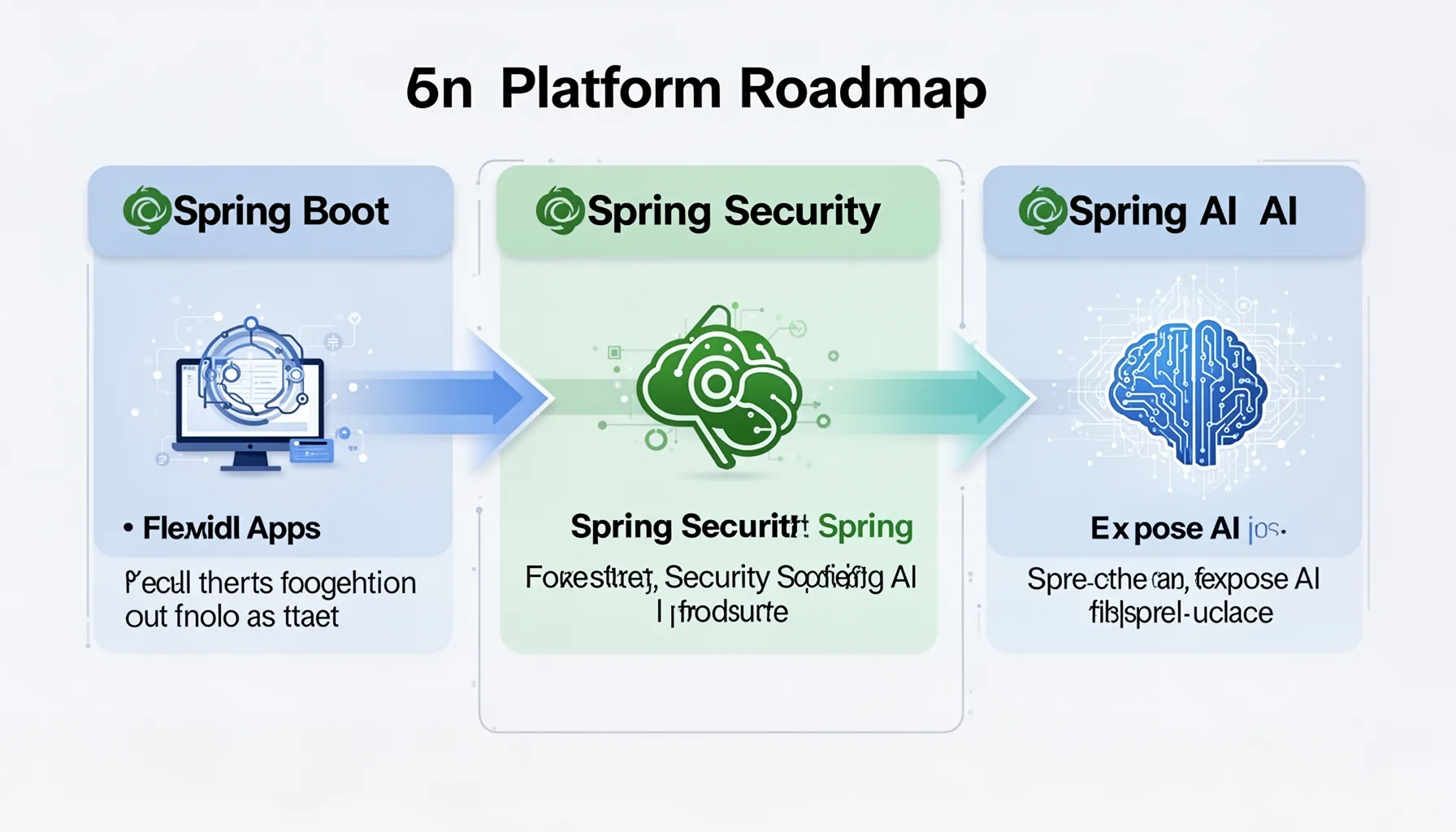
Spring Boot Spring Security Spring AI updates fit together as a platform roadmap by spelling out how apps start, secure access, and expose AI features in production. That's where the coherence becomes obvious. Spring Boot gives teams dependency management, autoconfiguration, actuator visibility, and deployment conventions that keep AI services from turning into one-off sidecars no one wants to own. And Spring Security becomes even more consequential because AI features often touch internal knowledge bases, customer records, and tool-calling actions that need tight authorization boundaries. Here's the thing. We'd argue many early AI pilots failed not because the model was weak, but because identity, audit, and policy controls fell apart, and Spring Security is the guardrail that keeps those pilots from becoming compliance trouble. A retailer, say Target, could rely on Boot to package a customer support service, use Security to enforce role-based access for internal agents, and let Spring AI orchestrate retrieval against approved product data only. Spring actuator endpoints and Micrometer hooks matter too, because model-backed endpoints need latency, token, and failure telemetry just like any other service. So the smarter migration path treats AI as another workload inside the Spring platform, not a separate stack that slips past your existing standards. That's a bigger shift than it sounds.
What is new in Spring AI 2026 when paired with Integration and messaging
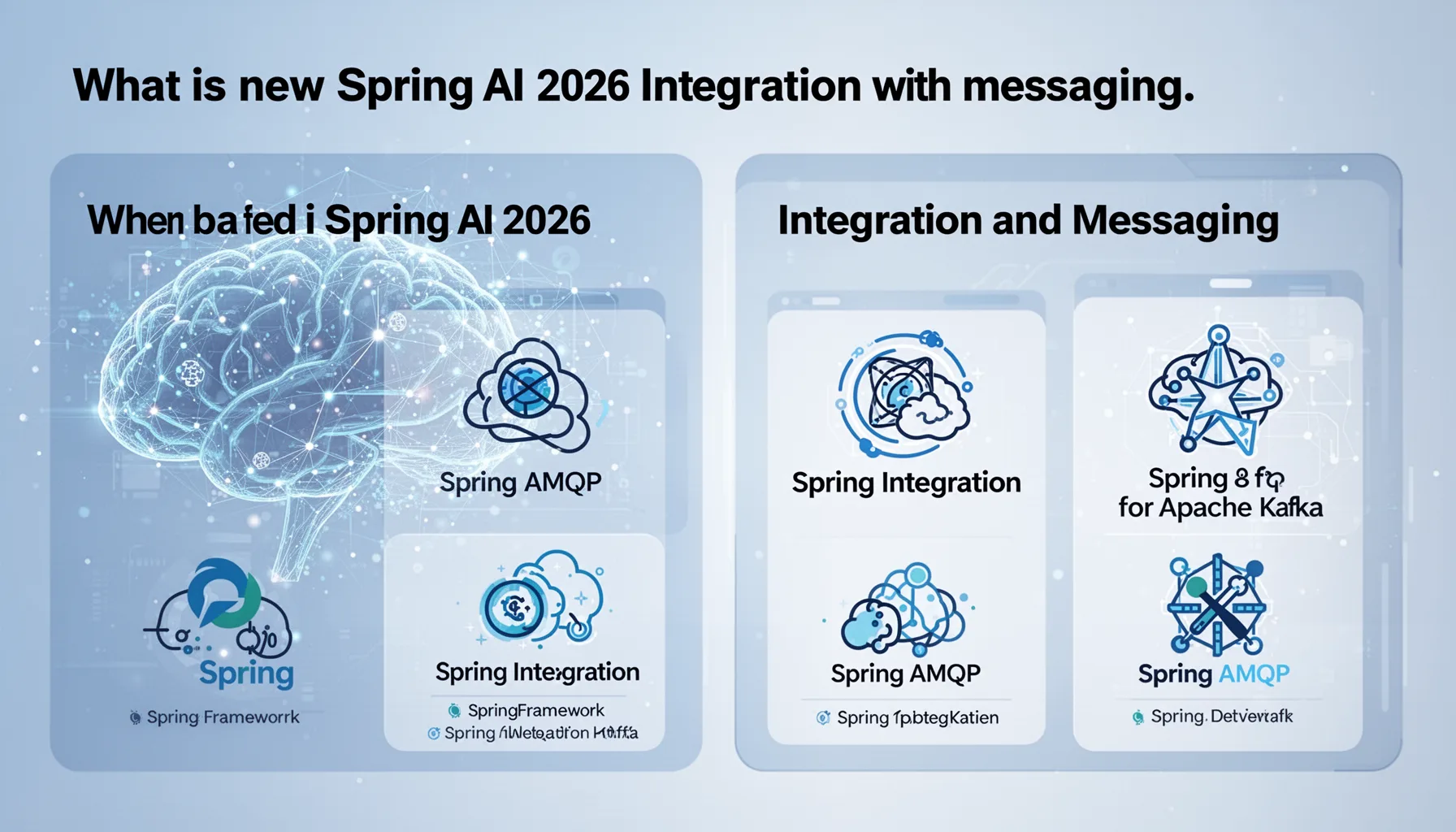
What is new in Spring AI 2026 becomes more useful when teams view it beside Spring Integration, Spring AMQP, and Spring for Apache Kafka rather than as a standalone library. That pairing changes the design conversation. AI features in production rarely stay inside a single request-response path, because prompt enrichment, safety checks, human review, and downstream actions often stretch across queues, topics, and adapters. Not quite a simple API call. Spring Integration gives teams enterprise integration patterns for routing, filtering, splitting, aggregating, and transforming AI-related messages without hand-rolling brittle glue code. And Spring AMQP plus Spring for Apache Kafka provide the messaging backbone needed for event-driven AI pipelines, whether that's asynchronous summarization, fraud triage, or document classification. Think of a logistics company like DHL ingesting shipment updates through Kafka, enriching them with a Spring AI model call, and routing exceptions through Spring Integration to human operators while publishing status changes over RabbitMQ. According to Confluent's 2024 Data Streaming Report, 91% of surveyed IT leaders said data streaming is strategic or very strategic to their business, which reinforces why AI middleware needs to line up with event platforms. My take is blunt: if your AI architecture ignores messaging and orchestration, it's still a demo.
How to use Spring AMQP and Spring Integration milestone release in secure AI architectures
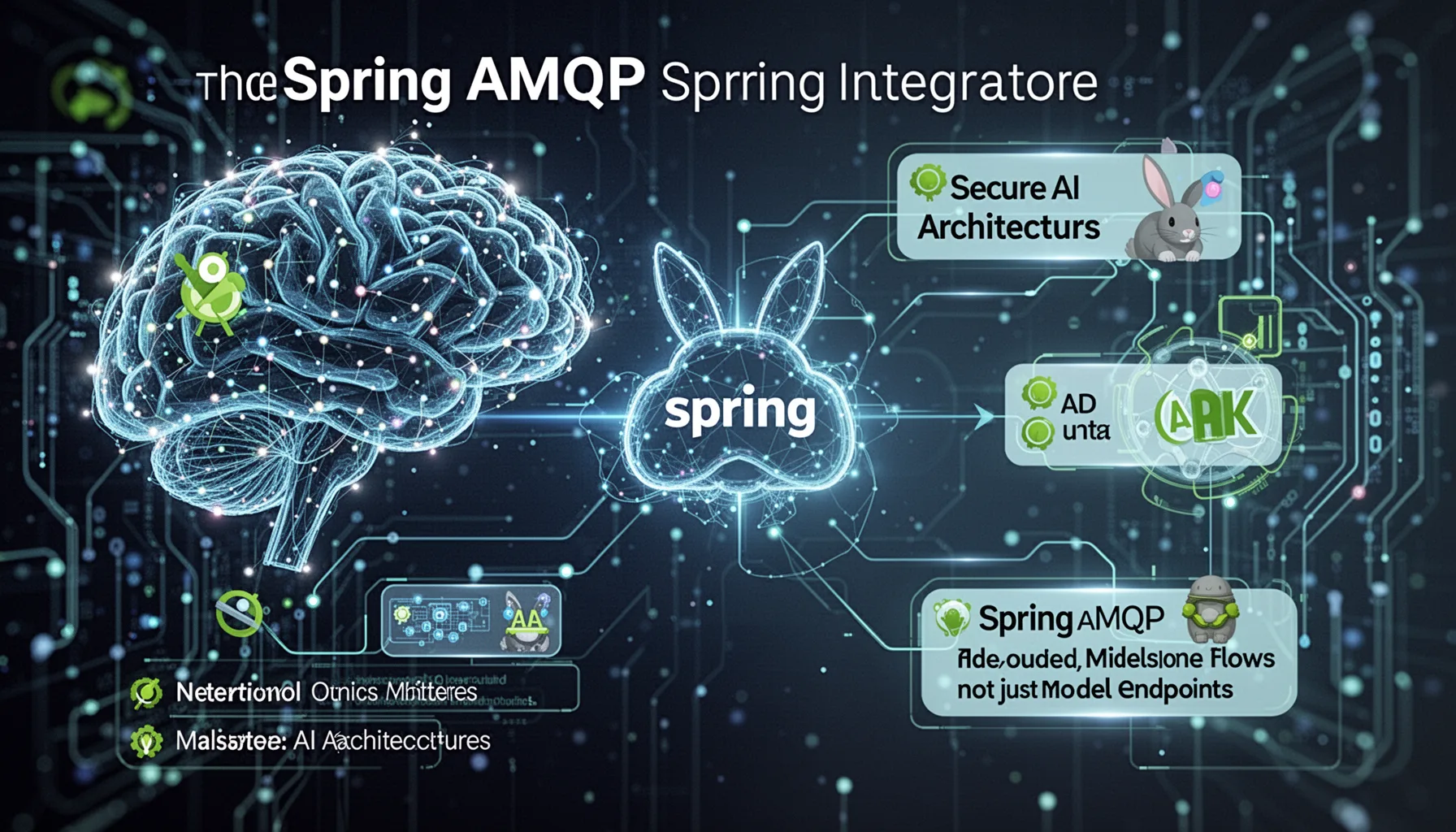
Spring AMQP and Spring Integration milestone release updates matter because secure AI architectures need decoupled flows, not just model endpoints. That's the production lesson. When a model call can trigger actions, touch regulated data, or hand work to humans, queues and integration channels create the buffers and control points architects need. Spring Integration can separate ingestion from inference, inference from validation, and validation from execution, which cuts blast radius when one component fails or starts behaving badly. That's not trivial. Spring AMQP then gives teams a practical message transport for workflows that need retries, dead-letter queues, and workload smoothing, especially in internal enterprise systems where RabbitMQ already runs. A healthcare software vendor like Epic could accept intake forms in a Boot API, pass them into a RabbitMQ queue, process extraction with Spring AI, and send uncertain outputs to a Spring Integration review flow guarded by Spring Security roles. Since the National Institute of Standards and Technology AI Risk Management Framework, updated as a living reference through 2024 and 2025 usage guidance, stresses governance, traceability, and human oversight, these middleware patterns map neatly to those control goals. We'd say the quiet win in these milestones isn't novelty; it's architecture discipline. Worth noting.
Latest Spring ecosystem releases explained as a migration plan
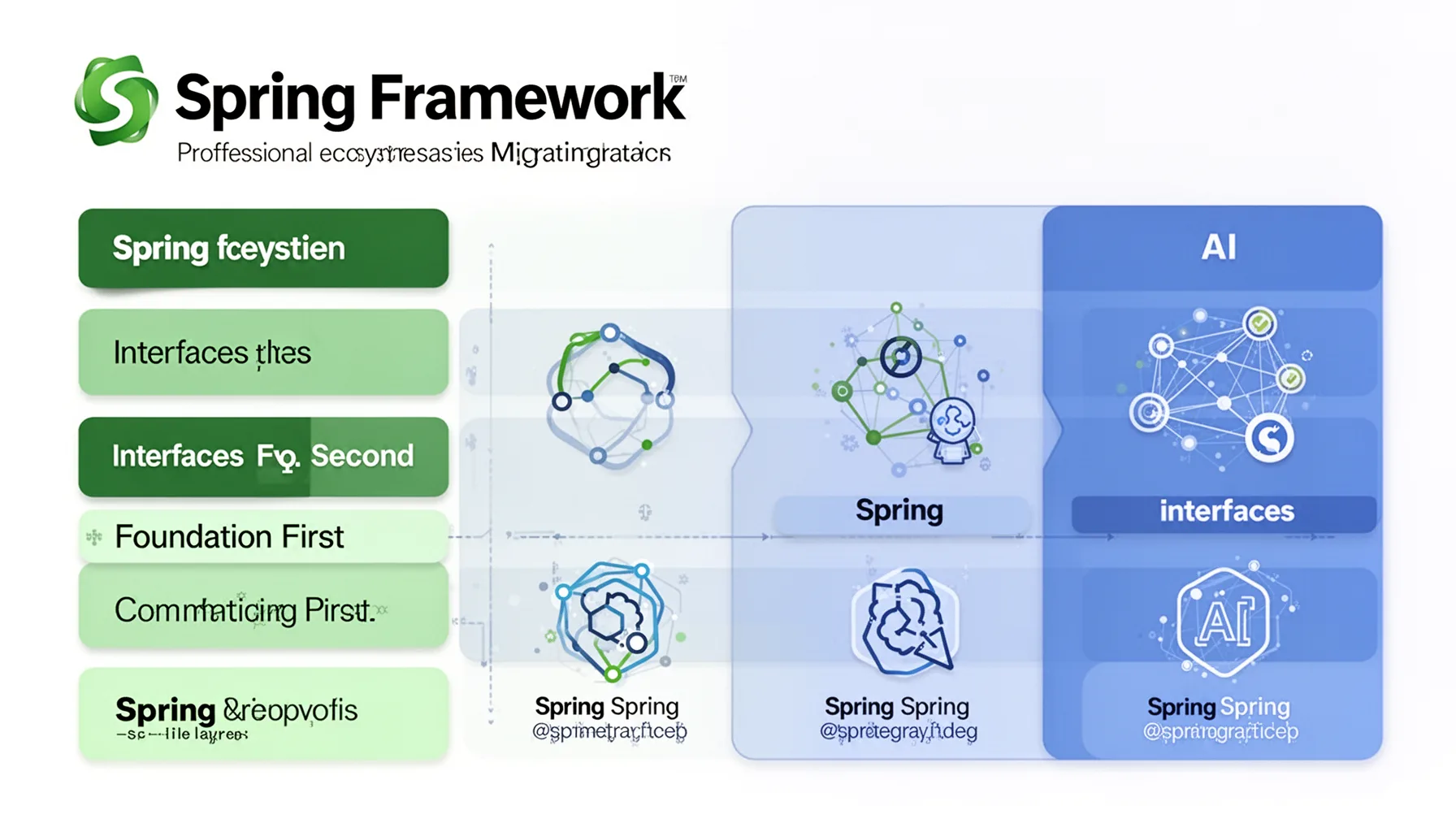
Latest Spring ecosystem releases explained as a migration plan means upgrading in layers: foundation first, interfaces second, AI last. Most teams need that order. Start with Spring Boot because dependency alignment and operational consistency cut the odds of version drift across Security, Data, Integration, Kafka, and AMQP. Then move to Spring Security and Spring Data so identity, authorization, and persistence rules are settled before any AI feature touches enterprise records. Simple enough. After that, upgrade Spring Integration plus your chosen messaging layer, whether that's AMQP or Kafka, so async patterns exist before model traffic arrives. Only then should teams introduce Spring AI into bounded use cases like internal search, ticket summarization, or developer assistance, where failure costs stay manageable. For example, an insurer such as AIG could migrate a claims platform by first moving shared services to the new Boot baseline, then adding secured retrieval flows, and only later enabling AI-generated adjuster drafts behind approval gates. Because the opinion here is pretty firm, we'll say it directly: teams that install Spring AI first and sort out the rest later are choosing excitement over architecture, and that usually ends badly.
Step-by-Step Guide
- 1
Audit your current Spring baseline
Start by mapping your live versions of Spring Boot, Spring Security, Spring Data, Spring Integration, Kafka clients, and AMQP dependencies. You need one compatibility picture before touching milestones. Check actuator, observability, and deployment assumptions too, because AI endpoints will amplify weak spots. And don't skip transitive dependencies; that's where painful surprises hide.
- 2
Set a platform upgrade order
Move foundation components before AI libraries. In practice, that usually means Boot first, then Security and Data, followed by Integration and messaging, and then Spring AI. This order keeps your app model stable while you add higher-risk features. It also gives architects cleaner rollback points.
- 3
Isolate one AI use case
Pick a narrow workflow with obvious business value and low regulatory exposure. Good candidates include internal knowledge retrieval, support summarization, or engineering documentation search. Avoid broad autonomous agent projects at the start. They create too many variables at once.
- 4
Insert security and policy controls
Wrap model access in the same identity and authorization controls you trust for the rest of your platform. Use Spring Security for role checks, token validation, and method-level controls where needed. Add logging and audit trails around prompts, retrieval events, and downstream actions. If the AI feature can't be audited, it probably shouldn't ship.
- 5
Wire messaging and integration flows
Use Spring Integration, Kafka, or AMQP to break complex AI workflows into observable stages. That lets you queue heavy work, retry safely, and route uncertain results to people instead of forcing synchronous all-or-nothing calls. A human review lane is not a sign of weakness. It's often what makes the system usable.
- 6
Measure production behavior early
Track latency, error rates, throughput, prompt volume, and model-related costs from day one. Use Boot actuator and your existing observability stack to compare AI endpoints with normal services. And define kill switches before launch, not after the first ugly incident. Teams that plan shutdown paths tend to recover faster.
Key Statistics
Frequently Asked Questions
Key Takeaways
- ✓Spring AI looks far less experimental when it arrives beside Boot, Security, and Integration milestones.
- ✓Enterprise teams should read March 2026 as a platform roadmap, not a pile of isolated release notes.
- ✓Kafka, AMQP, and Integration make Spring AI workable in event-driven production systems.
- ✓Security updates matter because AI features widen data exposure and access-control risk quickly.
- ✓Migration works best when teams upgrade the platform in layers instead of doing everything at once.