
Tajik language foundation model: why Soro matters
See why Soro, a Tajik language foundation model, matters for low-connectivity AI, deployment tradeoffs, and real user value.

Table of Contents
Quick Answer
Soro is a Tajik language foundation model built from open-weight Gemma 3 checkpoints and tuned for low-compute, low-connectivity use in Tajikistan. Its real significance is not just language coverage, but a deployment-first design that treats infrastructure limits, data governance, and practical user tasks as core model requirements.
People usually frame the Tajik language foundation model story as a simple launch. That's too neat. Soro, introduced in arXiv:2605.27379v1, pushes a harder and frankly more useful question: how do you build AI that keeps working when bandwidth cuts in and out, GPUs are hard to come by, and people need answers in Tajik now rather than after some future infrastructure upgrade? That's the real story. And if Soro holds up outside the paper, it won't matter only because Tajik gets a chatbot. It'll matter because the project treats deployment limits as part of the model, not as an awkward detail bolted on later.
Why this tajik language foundation model matters beyond a research release
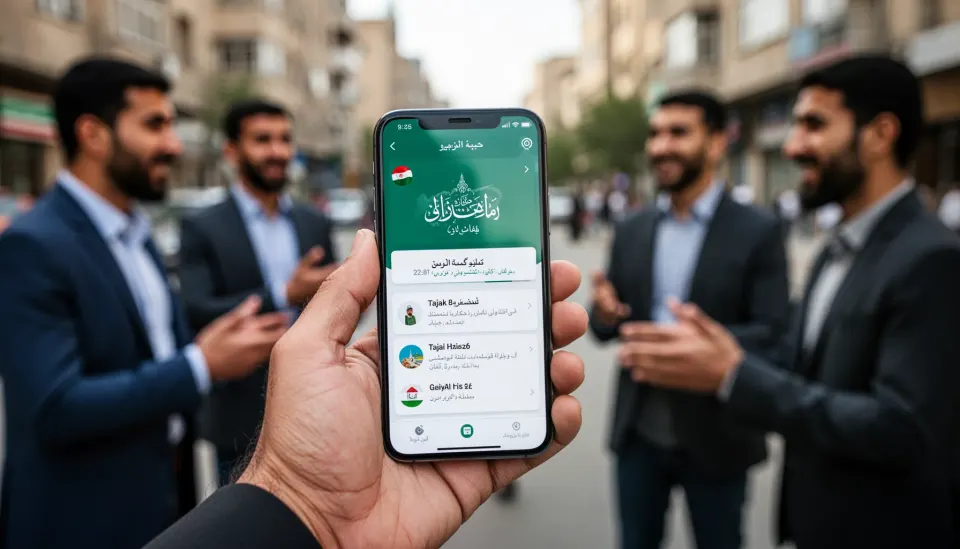
Soro stands out because this tajik language foundation model aims at day-to-day use under tight compute and shaky connectivity, not just leaderboard attention. That distinction matters. The paper lays out a family of Tajik-focused conversational LLMs built from open-weight Gemma 3 checkpoints, which gives the effort a credible technical footing instead of a risky from-scratch wager. Google released Gemma as a lightweight open model family meant for practical adaptation. So it's a sensible place to start for low-resource language work when budgets are pinched. We'd argue the bigger contribution is strategic: Soro treats Tajikistan's infrastructure conditions as a design input, and most low-resource AI coverage barely touches that. For a ministry office in Dushanbe, a regional school, or a small business with unstable mobile data, model size and latency aren't side notes. They're the product. That's a bigger shift than it sounds. And that's why Soro feels more consequential than many language-model announcements that promise inclusion while quietly assuming cloud-heavy deployment.
How Soro handles data choices, script normalization, and tajik language foundation model risks

A useful tajik language foundation model lives or dies on data governance, and Soro's hardest problems probably sit there rather than in raw architecture. Here's the thing. Tajik appears in Cyrillic today, but language data often spills across Persian and Latin transliterations, informal spellings, and uneven orthography, which can poison instruction tuning when teams don't normalize carefully. That issue looks smaller than it is. Unicode cleanup, script mapping, deduplication, and dialect-aware filtering sound dull, yet they shape whether a model understands people from Khujand, Bokhtar, or diaspora communities with mixed-language habits. The ACL Anthology has made this point for years. In smaller languages, messy corpora can swamp model gains. Worth noting. Soro's long-term value will depend on whether it preserves linguistic variation without ironing local speech into one sanitized standard. Our view is blunt: if the model serves only an official register, it may shine in demos and still miss ordinary users. A chatbot for public information, tutoring, or translation has to respect how people actually write. Not how a corpus curator wishes they wrote.
What lightweight chatbot for Tajik deployment really demands in low-connectivity settings

A lightweight chatbot for Tajik works only if it runs well enough on modest hardware, survives intermittent networks, and keeps costs low enough for institutions to say yes. That's the bar. In low-connectivity environments, every design choice changes viability: quantization, context-window limits, local caching, retrieval decisions, and whether inference runs on-device, on-prem, or through a regional server. Not glamorous. But these choices decide whether a school IT team can keep the system alive without a dedicated ML engineer. Meta, Google, and Hugging Face have all pushed smaller and more efficient models in the last two years, largely because latency and cost often matter more than benchmark bragging rights. For Tajikistan, that tradeoff looks even sharper. We'd say that's worth watching. If Soro can answer schoolwork questions, summarize official forms, or assist translation with acceptable quality on constrained infrastructure, then it may beat larger models that look better in labs but disappear in real use when the connection drops.
Where gemma 3 fine tuning for low resource languages can work and where it can break

Gemma 3 fine tuning for low resource languages can work well when the base model is strong, the instruction data is clean, and the task scope stays realistic. Simple enough. Soro seems to follow that route by adapting open Gemma checkpoints rather than chasing a giant pretraining run, which is usually the only sensible path for smaller language communities. Still, fine-tuning isn't magic. If the Tajik corpus overrepresents formal web text, translated material, or narrow domains, the model may sound fluent while missing slang, code-switching, or sector-specific needs in education and government. That's a common trap in multilingual NLP. Researchers at Stanford and Cohere have both pointed out that low-resource gains often hide domain brittleness. We think the right way to judge Soro is straightforward: test it on document assistance, translation support, tutoring prompts, and customer-service style exchanges, not just generic language-model metrics. Because a Tajik model that scores well but can't explain a school assignment or summarize a municipal notice hasn't really solved the problem. It has just benchmarked nicely. That's a sharper distinction than it first appears.
What success looks like for ai for tajikistan low connectivity deployment

Success for ai for tajikistan low connectivity deployment means ordinary users finish real tasks faster, more cheaply, and with more confidence in Tajik. That's the standard. In education, that might mean a student in a low-bandwidth setting gets reliable explanations and writing support without switching to Russian or English. In government services, it could mean citizens understand forms, benefit notices, or procedural guidance in plain Tajik through a local chatbot. And for local businesses, success may look like translation help, customer replies, and document drafting on inexpensive hardware. The strongest comparison isn't against frontier English models. It's against the current reality of weak language support, dependence on foreign-language interfaces, and tools that fail the second connectivity sours. We'd argue that's the comparison that counts. If Soro clears that bar, this tajik language foundation model won't just be a research artifact. It'll be an infrastructure lesson for every team building AI in low-resource settings.
Frequently Asked Questions
What is Soro in the Tajik AI ecosystem?
Why does a tajik language foundation model need to be lightweight?
How is gemma 3 fine tuning for low resource languages different from training from scratch?
What risks should teams watch when building a lightweight chatbot for Tajik?
Who could benefit most from ai for tajikistan low connectivity deployment?
Key Takeaways
- Soro matters because it treats connectivity limits as a product requirement rather than an afterthought.
- The Tajik language foundation model story is really about data quality, script normalization, and governance.
- Gemma 3 fine tuning gives Soro a realistic route to local deployment under constrained conditions.
- Real success means better education, translation, and public service support for Tajik speakers in everyday settings.
- Low-resource AI wins when models fit institutions, devices, budgets, and human workflows.