
Why Google AI can't spell Google: the real reason
Why Google AI can't spell Google explained: how image models handle text, why Gemini makes spelling errors, and what improves results.
Table of Contents
Quick Answer
Why Google AI can't spell Google comes down to how image generators learn and render text: they predict visual patterns, not letters with strict symbolic rules. Even strong multimodal models can produce readable-looking gibberish because image generation treats words more like textures than typed characters.
Why Google AI can't spell Google sounds like a throwaway joke. It isn't. The problem points to a plain, structural weakness in modern image generation, and Google's own demos make that hard to miss. We've landed in a strange moment: a model can explain a patent, condense a 60-page PDF, and then spit out a storefront sign that looks like alphabet soup. That's a bigger shift than it sounds.
Why Google AI can't spell Google in generated images
Why Google AI can't spell Google in generated images comes down mostly to model architecture, not some missing dictionary entry. Image generators like Google's Imagen line and image tools inside Gemini don't place letters one at a time the way Photoshop or a word processor would. They predict visual patches from training patterns, so the model often learns what text is supposed to resemble without learning strict spelling rules. That's the real break. A logo, headline, or shop sign turns into just another textured patch in the frame, and little mistakes pile up fast when the model tries to juggle shape, spacing, perspective, and meaning all at once. Not quite. Google isn't alone, either. OpenAI, Midjourney, and Stability AI systems have all produced similar text glitches in public tests. Our read is simple: the embarrassment stings more because Google built its name on search and language, so misspelling its own brand lands with extra force. Worth noting.
Google AI spelling problem explained: why image models miss words
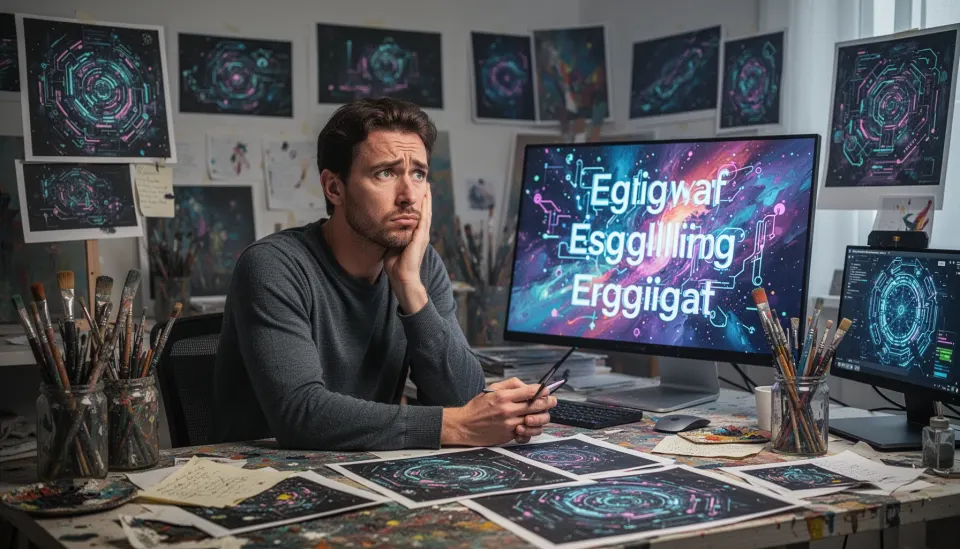
The Google AI spelling problem explained in plain English is pretty simple: image models don't really 'spell' the way language models do. A text-only model generates discrete tokens in order, which gives it a cleaner route to exact words and local consistency checks. But an image model has to solve typography, kerning, perspective, occlusion, and object composition at the same time. Messy stuff. That's a nasty optimization problem. Researchers at DeepMind and Google have improved multimodal reasoning, yet text inside images still stands out as one of the clearest weak spots in diffusion-style systems. A 2024 paper from researchers at UC Berkeley and Adobe pointed to the same issue, showing that even advanced models stumble on long strings, odd fonts, and busy layouts. Here's the thing. We'd argue people often read this as stupidity, when it's really a mismatch between the task and the model's native representation. That's a bigger shift than it sounds.
Why AI image generators misspell words even when language models can write
AI image generators misspell words because visual generation and language generation tackle different jobs with different internal machinery. A chatbot can output 'Google' correctly because it handles symbolic text directly through token prediction. An image generator has to encode that same word as a visual object, while preserving letter order and shape under all sorts of stylistic constraints. And that's where it slips. Ask for a cafe menu, packaging mockup, or billboard, and the model may nail the overall composition while mangling half the letters. Midjourney users have complained about this for years. So have people testing OpenAI's DALL-E, especially before stronger text-rendering tweaks showed up. Simple enough. The blunt version sticks because it's true: image models are much better at the appearance of writing than the discipline of writing. We'd argue that's the cleanest way to frame it.
Can generative AI spell correctly now

Generative AI can spell correctly in chat outputs quite well, but image-based spelling still fails often enough to matter. Gemini in text mode usually writes coherent prose because large language models train on token sequences with explicit textual structure. But switch to image generation or multimodal image editing, and that dependability drops once the system has to embed text inside a scene. Still, the results are getting better. Google, Ideogram, Recraft, and Adobe Firefly have all pushed harder on text-in-image quality, and Ideogram especially built an early reputation for stronger typography generation than many rivals. According to public benchmark-style comparisons from users and reviewers in 2024 and 2025, models tuned for posters and logos usually outperform general-purpose image generators on spelled words. That's telling. So yes, AI can spell correctly in some contexts. But no, a polished demo doesn't mean the underlying text-rendering limit disappeared. Worth noting.
How Google and others are fixing ai text rendering limitations
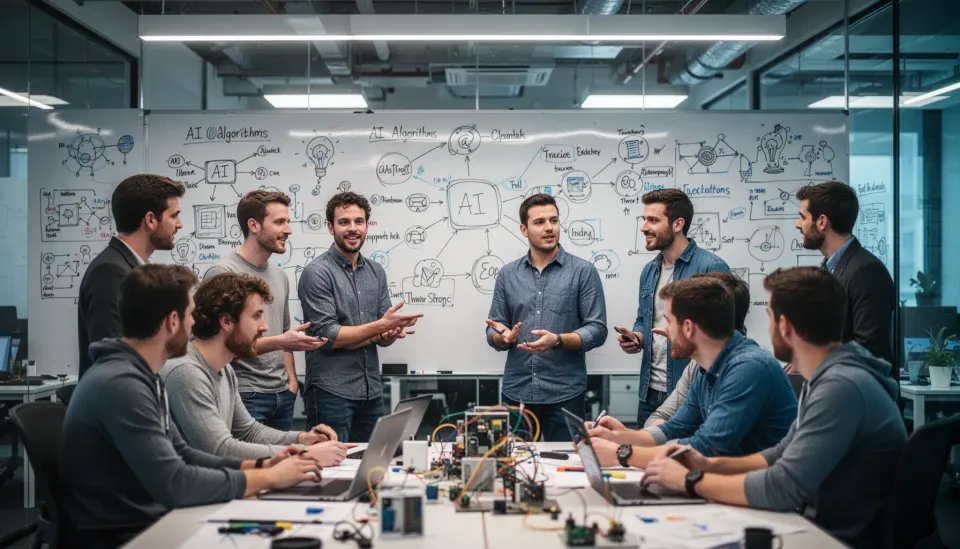
Google and other labs are fixing AI text rendering limitations by adding more structure around typography, layout, and post-generation correction. One path uses dedicated text-rendering modules or OCR-informed feedback loops so the model can check whether generated words match the prompt. Another path splits image creation into stages: build the scene first, then place text later under tighter constraints. That sounds less magical. It also works better. Adobe has benefited from the design-software angle because tools like Photoshop can mix generative fills with explicit text controls, while Ideogram focused directly on legible text as a product differentiator. Here's the thing. We think the likely end state looks hybrid, not pure generation: the model proposes the design, then a symbolic system or editor locks the letters into place. That's less romantic than full end-to-end AI art, but users care about results, not ideology. We'd argue that's the practical future.
Key Statistics
- A 2024 UC Berkeley and Adobe research effort on text rendering in image generation found that longer text strings sharply reduced accuracy across leading image models.That matters because users often ask generators for posters, menus, labels, and slides where string length quickly increases.
- Google DeepMind's Gemini 1.5 family expanded multimodal context handling in 2024, yet public demos and user reports still showed image text rendering errors in brand names and signage.The gap between strong reasoning and weak typography is exactly what makes the issue so visible.
- Adobe and third-party benchmark writeups in 2024 frequently showed specialized design-oriented models outperforming general image generators on legible text placement.This points to a practical takeaway: purpose-built systems usually beat all-purpose image models when exact words matter.
- By 2025, user testing across social platforms and review sites consistently ranked Ideogram among the stronger consumer tools for text-in-image generation, ahead of several bigger-name rivals.That comparison suggests the limitation isn't unsolved in every product, but it still isn't fully cracked at platform scale.
Frequently Asked Questions
Why can't Google AI spell Google in images?
What is the Google AI spelling problem explained simply?
How do AI image generators misspell words so often?
Can generative AI spell correctly in any setting?
When will ai text rendering limitations improve?
Key Takeaways
- Why Google AI can't spell Google starts with how image models predict pixels rather than language tokens
- Google Gemini spelling errors usually show up in images, not plain text chat responses
- AI image generators misspell words because text inside images is a hard compositional task
- Better typography modules and post-processing improve results, but they don't fully solve it
- The problem embarrasses Google, yet it affects nearly every major image model