
⚡ Quick Answer
To train computer vision model on 150k medical images, start by separating a small, high-confidence gold set from the larger noisy pool and build the pipeline around that trusted core. Then use staged labeling, quality controls, and semi-supervised learning so the 150k-image stool image dataset machine learning workflow improves accuracy without amplifying annotation mistakes.
Training a computer vision model on 150k medical images looks easy on paper. It isn't. A stool image dataset machine learning project can veer off course fast when labels drift, capture conditions swing around, or the clinical categories weren't nailed down early. We've seen this movie before in medical vision: teams assume sheer volume will carry them, then realize the first 5,000 carefully reviewed images did most of the real work. That's the upside, too. A trusted seed set gives you something solid to build on.
How to train computer vision model on 150k medical images the right way
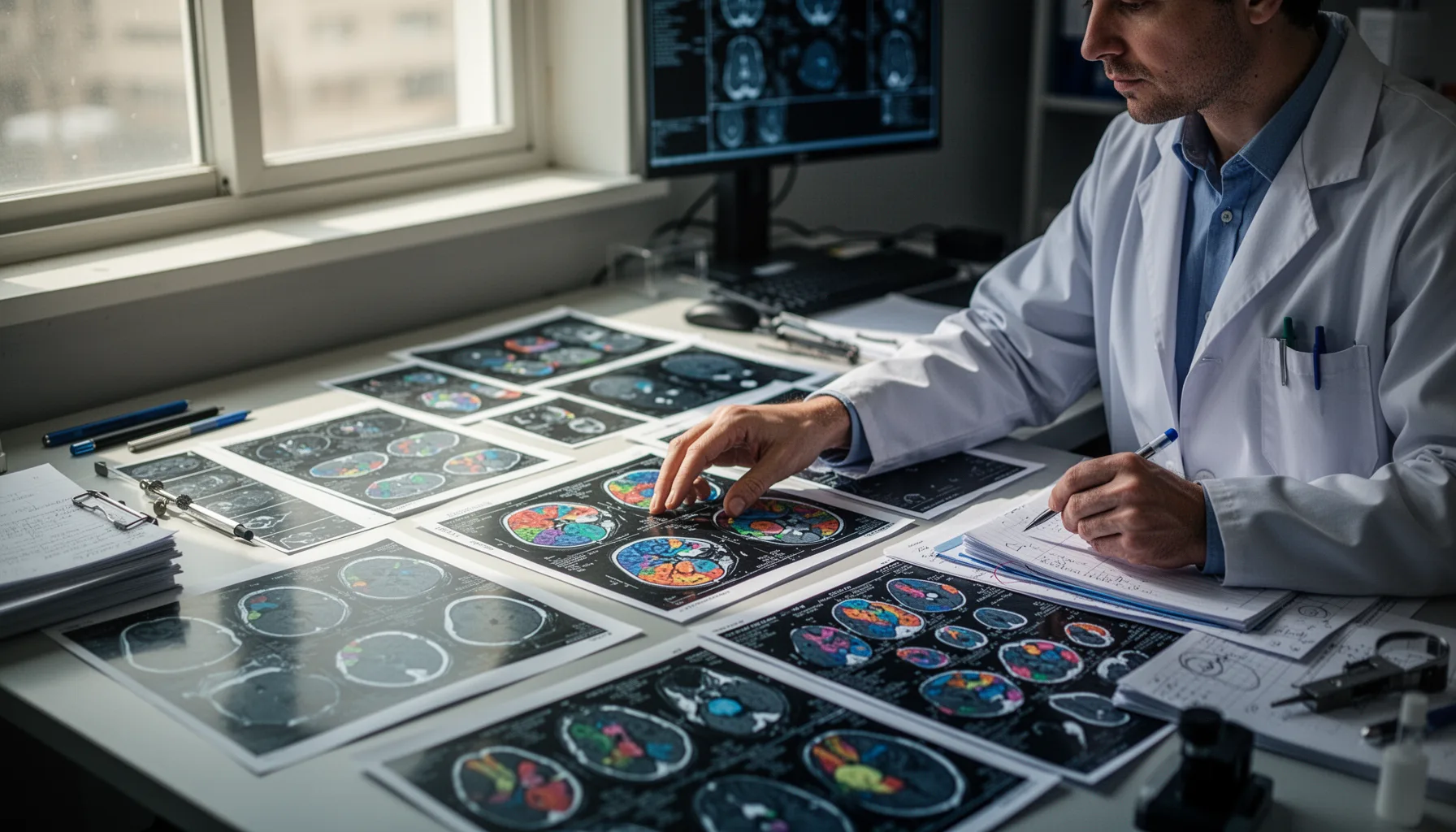
The smart way to train computer vision model on 150k medical images is to treat the dataset as trust tiers, not one giant bucket. Your first 5,000 human-verified images may be the most consequential asset in the whole project, because they define class boundaries, expose edge cases, and give you a validation anchor you can actually trust. And in medical imaging, that counts for more than raw volume. A 2023 WHO digital health guidance update stressed that clinical AI systems need documented data provenance and quality procedures, not just more samples. We'd argue for at least three buckets: gold-label images, silver-label images with partial confidence, and unreviewed or weak-label images. Google Health has done something close in medical imaging papers. Worth noting. Those teams often separate tightly curated evaluation sets from broader training sets so they don't fool themselves with noisy benchmarks. That's not paperwork for its own sake. It's how you stop the model from memorizing workflow mistakes instead of clinical signal.
What makes stool image dataset machine learning unusually hard
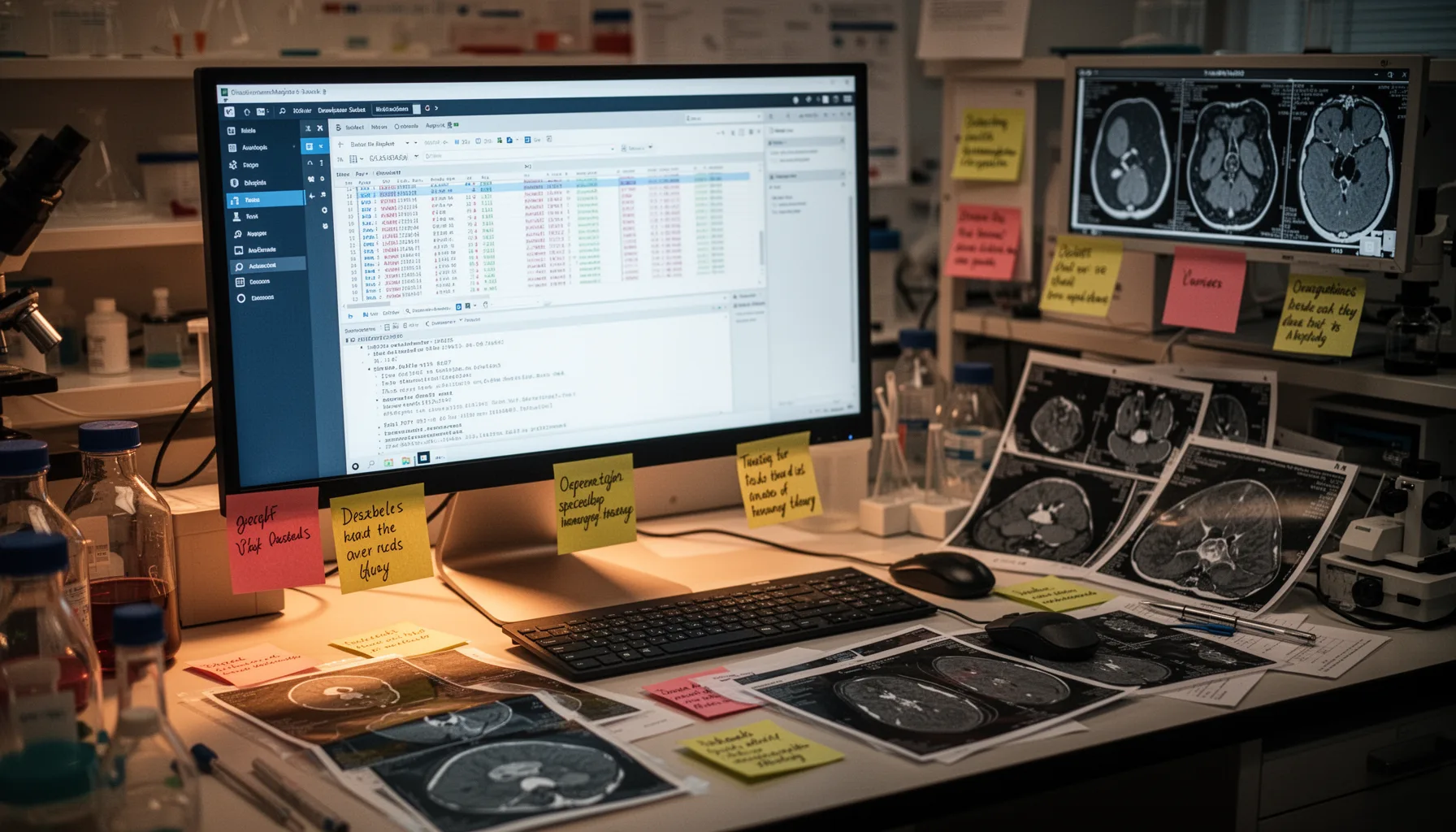
Stool image dataset machine learning is unusually tricky because the visual signal shifts with lighting, angle, container type, moisture, and phone camera quality. Small changes matter. So the model may grab onto junk cues unless you inspect the capture pipeline as hard as you inspect the labels. But plenty of teams miss that. If one class shows up mostly under clinic lighting and another mostly in home bathrooms, the classifier can cheat by learning context rather than stool characteristics. The FDA's Good Machine Learning Practice discussion papers have pushed developers toward representative data collection for exactly this reason, especially when user-operated devices add variability. Dermatology AI offers a concrete warning. Models there have overfit to rulers, skin markings, or clinic backgrounds instead of lesions, and the same failure mode can hit stool images. Here's the thing. Before you launch another labeling sprint, quantify source variation: device model, environment, resolution, crop style, and whether images were captured before or after preprocessing. That audit may tell you more than another week of manual review. That's a bigger shift than it sounds.
How to label and train on noisy image datasets without wasting the 150k set
The best way to label and train on noisy image datasets is to preserve uncertainty instead of forcing every image into a tidy but false category. In practice, record confidence, reviewer disagreement, and 'unable to classify' cases as first-class metadata. And yes, it's extra work. Yet it pays off, because ambiguous medical examples often carry the clearest signal about where the decision boundary really sits. Snorkel and similar weak supervision methods made this point years ago in enterprise ML: imperfect labels can still produce strong models when teams model label quality directly. For this dataset, train an initial model on the 5,000 verified images, score the remaining 145,000, and send only high-uncertainty or high-impact examples to human review. Much better. This active learning loop is far more efficient than checking every image by hand. If two clinicians disagree on Bristol Stool Scale categories, keep both labels and the adjudication notes. That disagreement may point straight to where the model will stumble in production. We'd argue that's information, not noise.
Best practices for medical image dataset curation and validation
Best practices for medical image dataset curation start with documentation, leakage prevention, and clinically meaningful splits. You need dataset cards, or something close, that cover collection setting, class definitions, exclusion rules, de-identification, annotation policy, and known blind spots. Still, many teams write all that down too late. Patient-level splitting is essential because near-duplicate images from the same person can inflate performance when they leak across train and test sets. CONSORT-AI and SPIRIT-AI, while aimed at clinical AI reporting, point to a broader rule: document methodology so outsiders can judge whether the model generalizes. Stanford's CheXpert is a named example worth studying. Its creators published label extraction details, uncertainty handling choices, and benchmark setup instead of just headline scores. Not quite standard practice. For a stool image dataset, validation should include subgroup checks by device type, capture environment, age band if available, and annotation confidence tier. If your test set isn't stricter than your training set, you'll get a flattering number and a weak product. We'd say that's one of the easiest traps to miss.
Why semi supervised learning for medical vision datasets fits this case
Semi supervised learning for medical vision datasets fits this case well because you already have the exact setup the method wants: a modest trusted set and a much larger unlabeled or weakly labeled pool. The usual recipe mixes supervised training on the gold set with pseudo-labeling, consistency regularization, or self-supervised pretraining across the full image collection. And that's where scale starts to pay off. Methods like FixMatch and Mean Teacher showed that unlabeled image data can lift model quality when confidence thresholds and augmentation policies are chosen with care. In medical imaging, MONAI and PyTorch-based pipelines now make these experiments much easier than they were even three years ago. We'd start with self-supervised representation learning on all 150,000 images, then fine-tune on the verified subset, then add pseudo-labeled samples in rounds based on confidence and clinical review rules. Simple enough. That's usually smarter than dumping every noisy label into one training run and hoping the model sorts it out. Worth watching.
Step-by-Step Guide
- 1
Define the target labels precisely
Write strict label definitions before expanding annotation. Include edge cases, exclusion criteria, and examples of borderline images. And make reviewers test the rubric on a small batch first, because hidden disagreement appears fast.
- 2
Create a gold-standard reference set
Set aside your best verified images as the gold set for training calibration and final evaluation. Keep this set patient-separated and frozen once approved. That discipline stops metric inflation later.
- 3
Score the remaining images by confidence
Assign each unreviewed image a confidence or trust tier using metadata, annotation source, and model uncertainty. Don't treat all weak labels as equal. A silver set with known caveats is much more useful than a giant unlabeled mess.
- 4
Train an initial baseline model
Use the gold set to train a conservative baseline with simple augmentations and clear metrics. Track AUROC, per-class recall, calibration, and confusion between neighboring classes. Those numbers will tell you where human review should focus next.
- 5
Run active learning review cycles
Send uncertain, rare, or clinically consequential samples to human reviewers in batches. Compare reviewer agreement and feed adjudicated labels back into the training pool. This loop usually cuts annotation cost while raising model quality.
- 6
Validate on real-world distribution shifts
Test the model on images from different devices, environments, and user behaviors. Measure whether performance drops on home captures versus clinic captures, or on low-light images versus clean examples. If it does, fix the data mix before deployment.
Key Statistics
Frequently Asked Questions
Key Takeaways
- ✓Start with a gold-standard subset instead of throwing the whole dataset in at once
- ✓Noisy labels can still pull their weight when confidence scores guide training
- ✓Semi-supervised learning fits stool image dataset machine learning especially well
- ✓Medical image curation needs patient privacy, provenance, and reviewer agreement checks
- ✓A good computer vision pipeline for large annotated datasets is iterative, not one-shot