
⚡ Quick Answer
AI and energy sector impacts now extend beyond data center power use into grid planning, industrial operations, forecasting, and system resilience. The AI Energy Futures report from Argonne points to a two-sided story: AI can raise electricity demand sharply while also improving how energy systems are modeled, managed, and maintained.
AI and energy sector impacts aren't just about power-hungry data centers. That's the loud headline. Not the whole file. The tougher question is whether AI will push electricity systems harder, and sooner, than utilities, regulators, and developers can adjust. Argonne National Laboratory matters here because it treats AI as both a demand shock and an operating tool. That's the real argument.
What the AI energy futures report says about AI and energy sector impacts

The AI energy futures report says AI and energy sector impacts will likely show up across electricity demand, grid operations, industrial efficiency, and planning decisions, not in one narrow lane. That's a wider story. Argonne National Laboratory has spent years studying how advanced computation and AI methods shape energy systems, and its framing works because it skips the tired savior-versus-villain script. That's refreshing. The core idea sounds simple enough: AI raises compute demand, but it also gives operators sharper forecasting, asset diagnostics, and scenario modeling. For utilities, that means the same technology adding load could also improve outage prediction and grid balancing. The International Energy Agency has repeatedly warned that digitalization changes both consumption patterns and system management, and Argonne's approach lines up with that larger body of evidence. We'd argue that's the right lens. Public debate still counts GPUs obsessively, while ignoring where AI can cut operational waste. Think of PJM planners or a utility in northern Virginia. That's a bigger shift than it sounds.
How AI affects electricity demand beyond hyperscale data centers

How AI affects electricity demand goes well beyond hyperscale data centers, because model training, inference growth, edge deployment, and cooling infrastructure stack up in very different ways over time. Not quite a single-source problem. A training cluster from Microsoft, Google, or Meta grabs attention, but steady inference demand from enterprise software may create a more durable load shape. That's the quieter issue. Grid planners care about coincidence, location, and timing, not just yearly consumption totals, so a big new facility in a constrained transmission region can matter more than an even larger one somewhere else. The U.S. Department of Energy and regional transmission organizations have both stressed that interconnection queues and local constraints already complicate new large loads. AI raises the pressure. Though forecasts still vary quite a bit, the common thread holds: planners now need finer demand models that capture AI workloads, water use, cooling designs, and the speed of campus buildouts. Worth noting. Ask anyone tracking ERCOT or Dominion territory.
AI innovations in energy systems are real, but they need operational discipline

AI innovations in energy systems are real, especially in forecasting, maintenance, grid control support, and industrial process optimization. Some of this already works. Utilities and grid operators already rely on machine learning for load forecasting, vegetation management, anomaly detection, and equipment failure prediction, and companies like Schneider Electric and Siemens sell those tools hard. But the payoff comes from tying models into messy operating systems, not from a slick demo on a conference stage. For example, predictive maintenance only makes the difference when sensor data quality, maintenance schedules, and spare-parts workflows actually line up with the model output. The National Renewable Energy Laboratory has shown that better forecasting and controls can raise efficiency in distributed energy settings, yet those gains still depend on human process changes. Here's the thing. The energy sector doesn't lack AI pilots; it lacks deployments that fit reliability rules and day-to-day operations. We'd say that's the real filter. A utility like Xcel Energy won't bet the grid on a lab toy.
Why AI data centers and power grid planning now belong in the same conversation
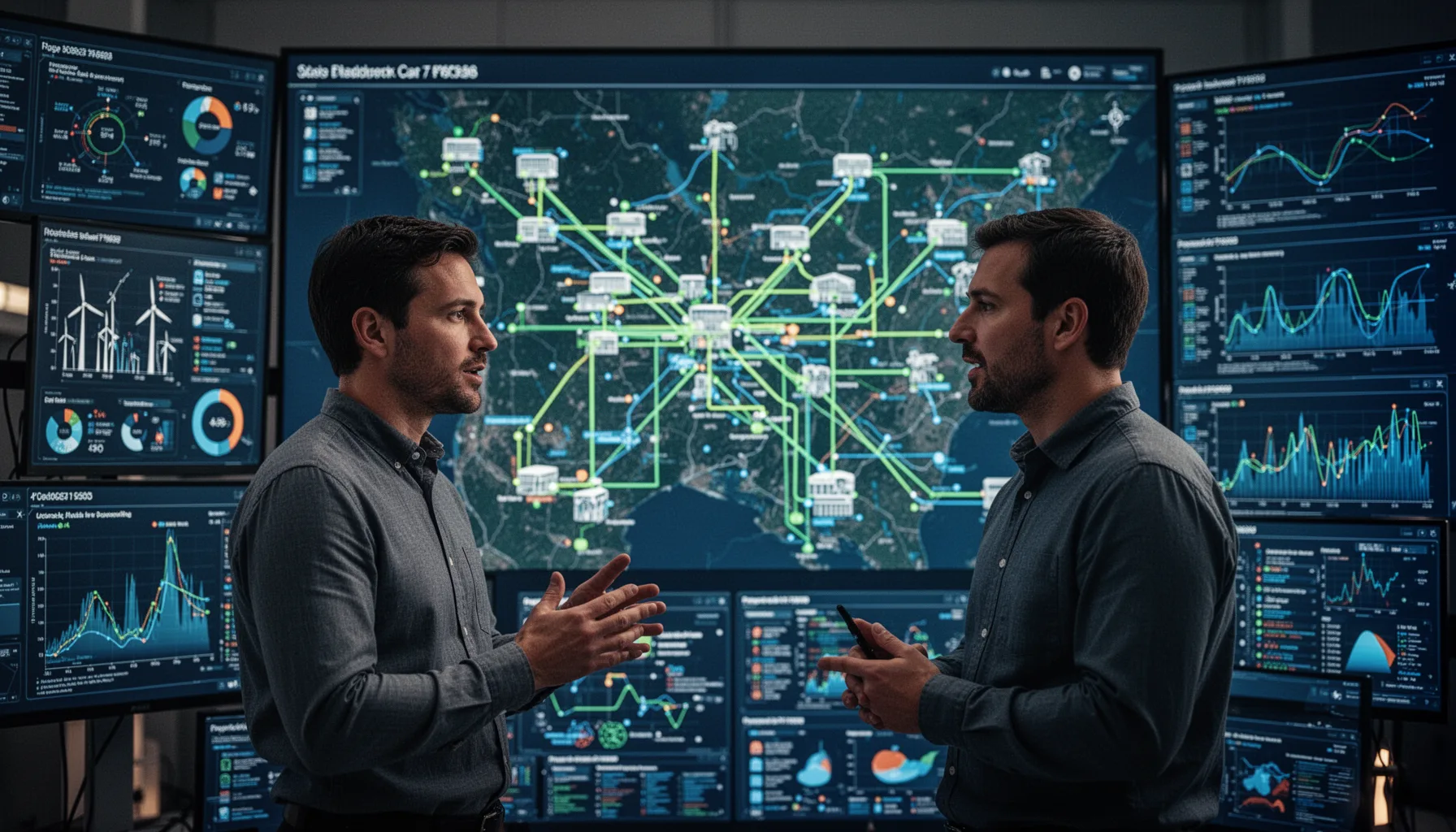
AI data centers and power grid planning belong in the same discussion because data center expansion no longer works as a simple real estate story. Not anymore. Power availability, transmission timing, substation upgrades, and community water concerns now shape site selection almost as much as fiber access and tax incentives. That's new in degree, not kind. Dominion Energy, Oncor, and other utilities in major data center markets have all faced tougher scrutiny over how quickly they can connect large loads without pushing costs unfairly onto other ratepayers. This is where policy friction starts. If states want AI investment, they need credible plans for generation, transmission, demand flexibility, and backup strategies, not just ribbon cuttings and glossy announcements. We'd go further: any serious AI industrial strategy now doubles as an energy infrastructure strategy. Politicians may dodge that. But if they fail to plan those systems together, they'll get slower approvals, meaner local pushback, and pricier power. That's not trivial.
Argonne AI energy futures raises the bigger question: who captures the gains

Argonne AI energy futures work raises a bigger question than technical feasibility, because the economic upside from AI-enabled energy optimization may not land where the new costs actually appear. That's the hard part. A utility may improve forecasting and asset use, while nearby communities absorb water stress or land-use tradeoffs from compute campuses. An industrial operator may cut energy waste, while residential customers worry about rate effects from faster grid investment. That distribution question matters. The Federal Energy Regulatory Commission, state utility commissions, and large-customer tariffs will shape who pays for upgrades tied to AI-heavy growth. We're already seeing this argument in several U.S. regions where large-load interconnection requests are colliding with legacy planning processes. My read is blunt: the next phase of AI and energy sector impacts won't be decided by model capability alone. It'll be decided by governance rules that assign cost, risk, and priority across the grid. Look at FERC debates or state commission hearings in Georgia. Worth watching.
Key Statistics
Frequently Asked Questions
Key Takeaways
- ✓AI and energy sector impacts cut both ways: more demand, but also better system optimization
- ✓The AI Energy Futures report treats data centers as only one piece of a much bigger story
- ✓Utilities need AI data centers and power grid planning to happen together, not in separate silos
- ✓Argonne AI energy futures work points to gains in forecasting, operations, and resilience
- ✓The big policy question is speed: can grids expand quickly enough as AI demand rises?