
⚡ Quick Answer
The anthropic valuation next funding round debate only makes sense if investors believe Anthropic can turn enterprise trust, Claude demand, and capital discipline into faster durable revenue growth than OpenAI. A higher price tag would reflect specific assumptions about margins, cloud economics, governance, and enterprise retention rather than hype alone.
Talk around an Anthropic valuation next funding round has accelerated in a hurry. But rumor mills in frontier AI usually miss the live issue. What would investors need to believe to price Anthropic above OpenAI, or at least near enough that both start to look like peers? We'd read this less as gossip and more as an investor memo. One built on product quality, enterprise traction, safety credibility, and capital efficiency. That's when the numbers start to carry weight.
Anthropic valuation next funding round: what are investors really buying?

The anthropic valuation next funding round story is really a wager on future cash flows under extreme uncertainty. Private investors don't pay for headlines. They pay for a thesis about revenue durability, gross margin potential, and strategic scarcity. Anthropic can make a credible case on all three because Claude has pulled real interest from enterprise buyers who care about long-context work, fewer hallucinations in some tasks, and a cleaner safety brand. And Amazon's close link to Anthropic through AWS, plus Google's investment, gives the company distribution and compute support that most startups simply can't reach for. According to PitchBook's 2024 venture outlook, AI infrastructure and foundation model deals still commanded valuation premiums even as the broader late-stage market cooled. We'd argue buyers aren't valuing a chatbot shop here. They're pricing an option on a trusted enterprise AI supplier with unusually strong backers. That's a bigger shift than it sounds.
Anthropic vs OpenAI valuation: does product quality justify a premium?

Anthropic vs OpenAI valuation has less to do with benchmark bragging rights and more to do with where product quality turns into revenue. Claude has earned a reputation for strong writing, analysis, and enterprise-friendly behavior, while OpenAI still leads on brand reach, developer mindshare, and consumer distribution through ChatGPT. Different strengths. In the real world, a CFO or CIO may pay up for a model vendor that creates fewer compliance headaches, especially in finance or healthcare, where procurement can drag on for months. And OpenAI's own enterprise push has been forceful, but its consumer footprint can blur the picture because investors have to separate sticky subscription revenue from business contracts with longer sales cycles and larger account value. A concrete example is Slack, which picked Anthropic as a model provider for certain AI features and reinforced Anthropic's image as a business-grade supplier, not just a research lab. Here's the thing. Superior product quality deserves a premium only when it improves win rates, retention, and expansion inside large accounts. Otherwise, it's just favorable press. Worth noting.
Will Anthropic surpass OpenAI valuation if enterprise traction is stronger?
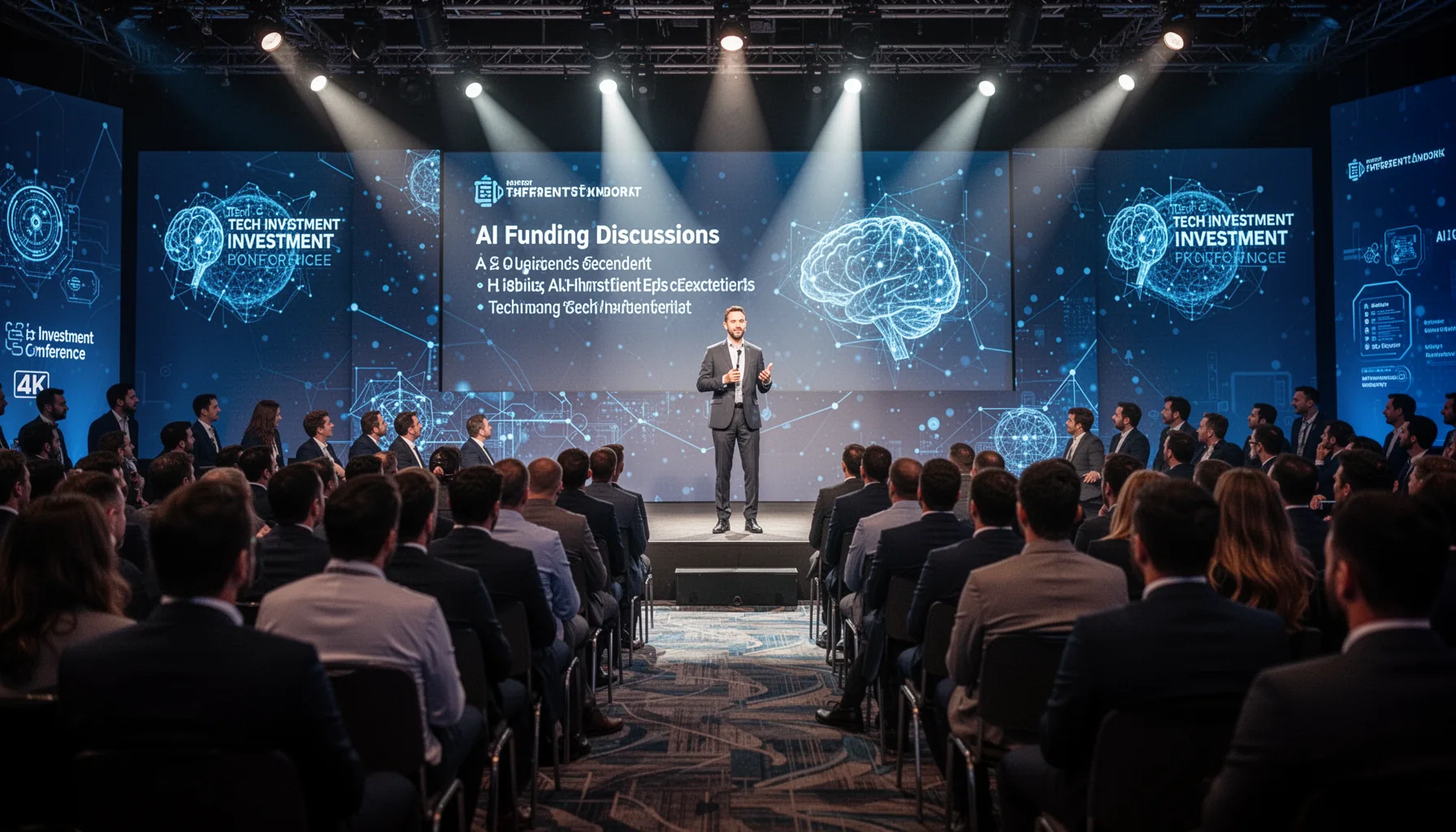
Will Anthropic surpass OpenAI valuation depends on whether investors think enterprise revenue will be both larger and cleaner than OpenAI's over the next few years. That's the center of the case. Enterprise contracts often come with better predictability than consumer subscriptions, but they also bring costly support, security reviews, and custom deployment work. Still, if Anthropic can point to faster growth in annualized enterprise revenue, lower churn among large customers, and rising usage through AWS Bedrock or direct API deals, investors may assign a richer multiple. Menlo Ventures said in its 2024 enterprise AI report that business spending on generative AI expanded sharply, with production use spreading beyond pilots. But that premium multiple only makes sense if Anthropic's enterprise demand isn't too concentrated in a small set of strategic partners or cloud channels. That's the hidden risk. If too much revenue flows through Amazon, the valuation may deserve a discount for dependency rather than a bonus for distribution. Not quite the same thing. We'd argue that's where the market gets sloppy.
Anthropic funding round 2026: what assumptions must be true for the price to work?

Anthropic funding round 2026 math probably asks investors to hold four assumptions in their heads at once. First, they need to believe Claude usage keeps compounding across direct API customers and channel partners like AWS. Second, they need confidence that training and inference costs fall quickly enough through hardware gains, model optimization, and pricing discipline to preserve future margins. Third, they must assume Anthropic's safety-led governance stays an asset in procurement rather than turning into a brake on speed. And fourth, they need a believable path to liquidity, whether through a later mega-round, tender offers for employees, or a longer-range IPO story. According to Stanford's 2024 AI Index, frontier model development costs and training compute demands kept rising steeply, which makes capital efficiency central to any valuation case. This is where rumor-driven coverage gets lazy. If Anthropic wants a premium, it can't just look like a better lab. It has to look like a better business under capex pressure. That's a harsher test than it sounds.
Claude maker valuation news: what does a higher price imply for employees, M&A, and governance?

Claude maker valuation news affects more than the cap table. A higher valuation can make employee equity look stronger on paper, yet it can also cut real liquidity if future rounds have to clear an even higher hurdle before secondaries or a public listing make sense. And for acquirers, a very high valuation can shrink M&A options because only a tiny circle of buyers could absorb the price, especially under antitrust scrutiny around firms like Amazon, Google, or Microsoft. Governance gets sharper too. Anthropic has sold itself as more safety-conscious than many peers, so investors will ask whether that structure speeds enterprise trust or creates internal limits when the market wants faster product releases. We saw a version of this in OpenAI's governance crisis in late 2023, when nonprofit control and commercial ambition collided in public view. Simple enough. A rich valuation doesn't erase governance risk. It magnifies it. That's why financial optics and business fundamentals need to stay separate in any serious memo. We'd say that's the adult way to read it.
Key Statistics
Frequently Asked Questions
Key Takeaways
- ✓A premium valuation needs more than buzz; it needs durable enterprise revenue assumptions.
- ✓Anthropic vs OpenAI valuation depends heavily on revenue mix, not model benchmarks alone.
- ✓Safety branding matters, but only if it lowers customer friction and churn.
- ✓Cloud dependence can boost distribution while also capping strategic freedom.
- ✓A richer round today can raise tomorrow's fundraising pressure for everyone involved.