
⚡ Quick Answer
Gemma 4 26B A4B NVFP4 appears to run well on an RTX 5090 with roughly 80% of 32GB VRAM allocated, using about 18.8GB and reaching around 50,000 context length. Its published scores also suggest NVFP4 compression preserves much of full-precision performance across GPQA Diamond, AIME 2025, MMLU Pro, and coding benchmarks.
Gemma 4 26B A4B NVFP4 just turned into a seriously consequential local model story. Not in theory. On actual hardware. One user report says it runs on an RTX 5090 with about 80% of 32GB allocated, comes in near 18.8GB in memory, and reaches roughly 50,000 context. That's the sort of result that makes local AI builders stop doom-scrolling. Then start testing.
Can Gemma 4 26B A4B NVFP4 run on RTX 5090?
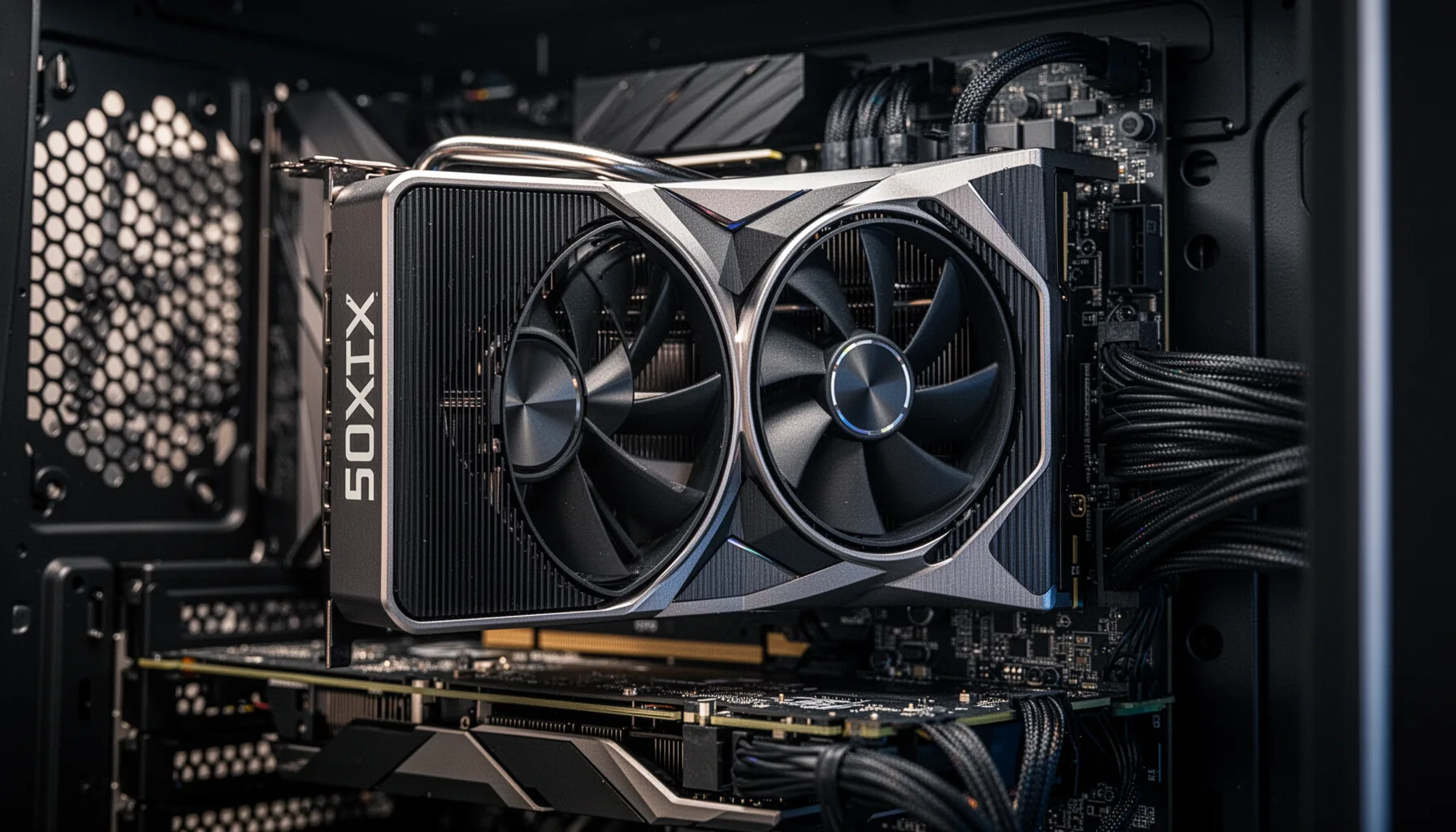
Yes, Gemma 4 26B A4B NVFP4 seems to run on an RTX 5090 with roughly 80% VRAM allocation and about 50k context. That's the headline people care about. Frankly, for a lot of local inference hobbyists, it's the only one they need. The reported memory footprint lands at 18.8GB, which leaves some breathing room on a 32GB card for runtime overhead, cache behavior, and the odd quirks of different inference stacks. And that matters. Cards rarely hand over every last bit of advertised VRAM to a model. Not quite. Framework overhead tends to eat some of it, especially in llama.cpp, Ollama, vLLM, or custom CUDA pipelines. NVIDIA's RTX 5090 hits a sweet spot here because it offers workstation-like memory headroom without pushing people into enterprise silicon. We'd argue that's a bigger shift than it sounds. For anyone searching can Gemma 4 26B run on RTX 5090, this is one of the clearest yes-like answers we've seen.
Gemma 4 26B NVFP4 benchmark results: how much performance does compression keep?

Gemma 4 26B NVFP4 benchmark results suggest only a tiny quality drop versus the full-precision baseline. That's the striking bit. Low-bit formats usually ask users to swallow a harsher tradeoff than this. GPQA Diamond lands at 79.90% versus an 80.30% baseline, while AIME 2025 actually ticks up to 90.00% from 88.95%. Weird, but real. That won't repeat across every evaluation, but it does point to a quantization method that didn't gut reasoning quality. MMLU Pro comes in at 84.80% versus 85.00%, LiveCodeBench pass@1 sits at 79.80% versus 80.50%, IFBench posts 78.1% versus 77.77%, and IFEval reaches 96.40% versus 96.60%. Those deltas are tight. Simple enough. For anyone tracking NVFP4 model performance, the takeaway isn't mysterious: this format appears to preserve enough fidelity that most people probably won't notice a dramatic drop in day-to-day technical or coding work. We'd say that's worth watching.
What are Gemma 4 26B VRAM requirements for local inference?
Gemma 4 26B VRAM requirements look much more manageable in NVFP4 than the raw parameter count would make you expect. The reported 18.8GB footprint keeps the model comfortably under a 32GB ceiling, which reshapes the local deployment equation for plenty of developers. And it reshapes it fast. A 26B-class model in a higher-precision format would usually push many consumer GPUs out of the running, especially once context grows and memory fragmentation starts nibbling away. By contrast, this setup leaves room for longer contexts, and the cited 50k context result feels like proof from actual use rather than spreadsheet cosplay. Real-world VRAM use will still vary by backend, prompt cache strategy, tensor parallel choices, and whether you offload parts to system RAM. Here's the thing. If you're shopping for the best local LLM for 32GB GPU, Gemma 4 26B A4B NVFP4 now belongs on the shortlist beside Qwen-class and Llama-derived options aimed at prosumer cards. Worth noting.
Why Gemma 4 26B A4B NVFP4 matters for the best local LLM for 32GB GPU

Gemma 4 26B A4B NVFP4 matters because it shrinks the distance between serious model capability and hardware regular people can actually buy. That's not hype. It's a practical shift in what one high-end desktop GPU can now pull off at home or in a small lab. For months, the local AI crowd had to choose between smaller models that fit neatly and larger ones that demanded awkward compromises, aggressive offloading, or dual-GPU setups. This model points to a more attractive middle path. Google's Gemma family already carries weight because developers trust the ecosystem, and NVIDIA's optimization work adds deployment realism that benchmark charts by themselves can't provide. Think about a solo developer in Austin running an RTX 5090 for code generation, retrieval-heavy research, and long-document analysis without recurring API bills. We'd argue that's a bigger shift than it first appears. Gemma 4 26B A4B NVFP4 probably won't be the last model to make this case. But right now, it's one of the strongest examples of efficient local inference we've seen.
Key Statistics
Frequently Asked Questions
Key Takeaways
- ✓Gemma 4 26B A4B NVFP4 looks highly usable on a 32GB RTX 5090 setup.
- ✓The reported 18.8GB footprint makes local high-context inference far more attainable.
- ✓Benchmark deltas versus full precision stay unusually tight across reasoning and code tests.
- ✓For many users, this now looks like a best local LLM for 32GB GPU contender.
- ✓The real story is efficiency: more context, less memory, and only modest quality tradeoffs.