
Liquid AI LFM3 Models: On-Device AI for Enterprise
Liquid AI LFM3 models bring browser, voice, and vision tasks to enterprise devices. See deployment options and what teams should test first.
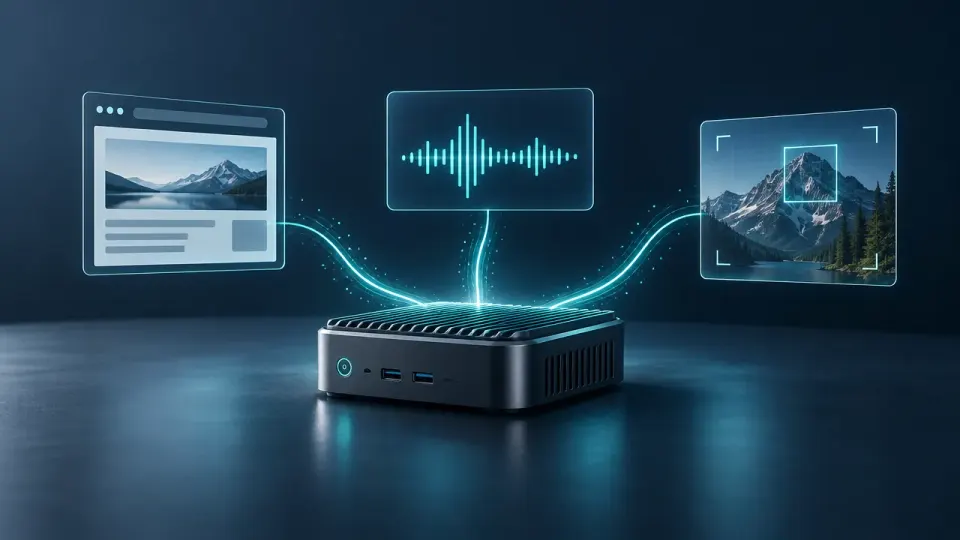
Table of Contents
Quick Answer
Liquid AI announced six LFM3 models designed for language, vision, audio, and structured decision-making tasks across devices, private servers, and cloud infrastructure. Enterprises can evaluate them for workflows such as browser automation, voice commands, and image recognition, but should test accuracy, latency, hardware needs, and governance in their own environment.
For enterprises weighing how to deploy AI, the announcement puts two questions in focus: which tasks need a specialized model, and where should that model run? Liquid AI is positioning LFM3 as a family of comparatively compact models that organizations can customize and deploy across devices, private servers, or cloud infrastructure.
What Liquid AI announced in the LFM3 lineup
The family is built around a 1.7-billion-parameter foundation, with specialized models at around 2 billion parameters. Liquid AI reported that the models were pretrained on 22 trillion tokens.
Named models in the lineup include:
- LFM3-1.7B , the base language model.
- LFM3-VL-2B , for vision-language tasks such as interpreting images.
- LFM3-Audio-2B , for audio and speech-related tasks.
- LFM3-Omni-2B , for multimodal work across inputs and tasks.
The six-model lineup also includes models for structured decisions. Liquid AI describes its architecture as “tri-hybrid,” combining convolution layers with attention mechanisms that can use limited or wider context. The aim is to balance different ways of processing information within models intended for practical deployment.
How the models target on-device enterprise workflows
Liquid AI highlights tasks that map to everyday business processes: routing requests, extracting information from documents, inspecting images, and operating business applications. In a browser workflow, for example, an agent might interpret a request and take actions within an enterprise application. A vision model could help examine an image, while an audio model could support voice-driven commands.
The appeal of smaller, specialized models is that organizations may be able to match a model to a defined task instead of using a larger model for every request. Running inference on a device or private infrastructure can also give businesses more control over where processing happens. That may matter when workflows involve internal documents, customer information, or systems with specific data-handling requirements.
These are deployment goals, not a guarantee that every task will work equally well on every device. Performance will depend on the model, the hardware, the workflow, and how the business configures and evaluates the system.
What deployment flexibility could mean for businesses
Liquid AI says enterprises can customize the models using a single GPU and deploy them on devices, private servers, or cloud infrastructure. That range could let organizations choose different setups for different workloads: an on-device model for a focused task, or server-based deployment where a workflow needs more centralized management.
Before adopting LFM3, teams should verify the capabilities that matter for their use case. That includes testing accuracy on their own documents, images, audio, and application workflows; checking latency and hardware requirements; and assessing customization, security, and ongoing maintenance needs. They should also confirm which model in the lineup supports the specific input and output formats their systems require.
LFM3 gives enterprises another set of options for bringing AI closer to business applications and controlled infrastructure. The practical test will be whether its specialized models meet a team’s accuracy, performance, and governance requirements in real workflows. Review your on-device AI requirements and compare them with Liquid AI’s model lineup and deployment options.
Step-by-Step Guide
Choose a focused enterprise workflow
Select a bounded task such as extracting fields from documents, inspecting images, or operating a business application through a browser agent.
Match the workflow to an LFM3 model
Check whether the task requires language, vision, audio, multimodal input, or structured decision-making, then confirm the selected model supports the required formats.
Test with representative business data
Evaluate the model on documents, images, audio, and application workflows that reflect real operating conditions, and record accuracy and failure cases.
Measure deployment requirements
Benchmark latency and hardware use on the intended device or server, and compare on-device, private-server, and cloud deployment options.
Review governance and maintenance
Assess data handling, security controls, customization needs, monitoring, and ongoing model maintenance before moving the workflow into production.
Key Statistics
- The LFM3 announcement covers six models.Liquid AI announced the six-model lineup on October 27, 2026, according to the article.
- Liquid AI reports that the models were pretrained on 22 trillion tokens.This pretraining figure is attributed to Liquid AI's description of the LFM3 family in the announcement.
- The family is built around a 1.7-billion-parameter foundation, with specialized models at around 2 billion parameters.These model sizes are reported in the article's summary of Liquid AI's LFM3 lineup.
- Liquid AI says enterprises can customize the models using a single GPU.This is a deployment and customization claim from Liquid AI; teams should verify the requirements for their chosen model and workflow.
Frequently Asked Questions
What are Liquid AI LFM3 models?
Which enterprise tasks could LFM3 models support?
Can Liquid AI LFM3 models run on enterprise devices?
How should businesses evaluate LFM3 before deployment?
Key Takeaways
- Liquid AI's six-model LFM3 lineup targets language, vision, audio, and structured decision-making tasks.
- The family includes a 1.7-billion-parameter base model and specialized models around 2 billion parameters.
- Potential use cases include browser agents, document extraction, image inspection, and voice-driven commands.
- Liquid AI says enterprises can customize the models using a single GPU and deploy them on devices, private servers, or cloud infrastructure.
- Teams should validate task accuracy, latency, hardware requirements, security, and maintenance before adopting a model.