
Sam Altman Molotov Attack Response and the Media Fallout
Sam Altman Molotov attack response sparked backlash. Here’s the timeline, the media strategy, and what it means for OpenAI trust.
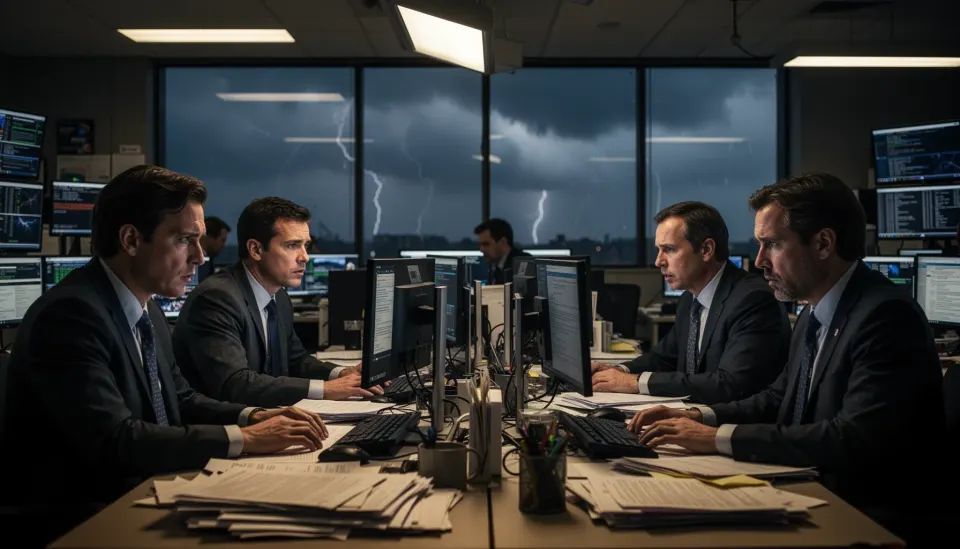
Table of Contents
Quick Answer
Sam Altman’s Molotov attack response became controversial because he appeared to suggest critical journalism helped create the conditions for the incident. The bigger story is not just whether that framing was fair, but how OpenAI’s leadership manages trust by embracing reporting when useful and rejecting it when costly.
Sam Altman's response to the Molotov attack landed at a fraught moment for OpenAI. And rather than settling nerves, it widened the fight. The first argument centered on whether Altman unfairly pinned part of the fallout on journalists after the incident. But the tougher question sits underneath it: what does that framing suggest about how AI leaders work with the press, assign responsibility, and try to steady trust when their company already sits under a harsh spotlight? Worth noting.
What happened in the Sam Altman Molotov attack response timeline?
The Sam Altman Molotov attack response only really clicks once you rebuild the timeline around the incident and the reporting that came before it. A recent New Yorker investigation had already pushed Altman, OpenAI governance, and internal friction back into public view before he posted about the attack and called that coverage 'incendiary.' That's the hinge point. And the backlash grew because critics said he wasn't just denouncing violence; he was also nudging some blame toward journalism that had examined him closely. OpenAI's own record made that harder to justify, since the company had earlier pointed to reporting and document repositories tied to that same wider stream of public reporting when it fit the message. Here's the thing. Criticism doesn't cause violence in any simple, direct way. But from a communications angle, tying hard reporting to a violent act is a loaded rhetorical choice, especially for a CEO whose company has already faced recurring questions about transparency and board accountability. We'd argue that's a bigger shift than it sounds. Think of the New Yorker by name here.
Why is the Altman blames journalists blog post framing so contentious?

The Altman blames journalists blog post framing stays contentious because it treats scrutiny as valid input one minute and suspect provocation the next. That's the inconsistency many observers reacted to. If a company points to reporting, leaked documents, or investigative work while making its own public case, it can't easily wave off nearby journalism as dangerous just because the coverage turned uncomfortable. That's the credibility trap. A stronger crisis response would have kept the focus on the attack, thanked law enforcement, rejected political violence, and skipped any hint that reporters shared responsibility for a perpetrator's choices. Instead, Altman's wording opened a second controversy on top of the first. Not quite. We've seen this move elsewhere too, from Elon Musk sparring with advertisers and reporters to Meta executives trying to reframe criticism as coordinated hostility, and those tactics usually harden distrust instead of dissolving it. Worth watching, frankly.
How does the OpenAI New Yorker investigation reaction expose a trust problem?

The OpenAI New Yorker investigation reaction points to a trust problem because it reveals a selective theory of legitimacy. When outside reporting matches a company's preferred narrative, leaders treat it as evidence; when it threatens executive standing, they suddenly cast it as irresponsible or destabilizing. That's not a stable standard. And in governance terms, this matters because OpenAI has already lived through the 2023 board crisis, leadership reversals, and ongoing questions about nonprofit oversight, investor influence, and safety authority. So every public statement now carries extra weight. According to Edelman's 2024 Trust Barometer, trust in business leaders stays fragile when people think executives distort information to protect themselves, which is why rhetorical overreach in a crisis can do more harm than the original criticism. Simple enough. We'd argue the New Yorker episode resonated not because it was uniquely explosive, but because it fit an existing pattern: OpenAI often asks the public to trust its judgment while resisting full outside scrutiny of how that judgment gets exercised. That's a bigger shift than it sounds.
What does this OpenAI PR crisis analysis say about media power and AI leadership?

This OpenAI PR crisis analysis points to something larger than a single blog post: AI leaders increasingly treat narrative control as a governance tool. That's risky. The companies building frontier models shape labor markets, education, security policy, and public information systems, so their executives don't get to sound like startup founders nursing a bruised ego on social media. They hold institutional power now. And when a leader suggests investigative journalism contributes to a dangerous climate, that statement can chill scrutiny even if no formal threat follows. That's why this reaches beyond Altman. Compare it with how Microsoft usually handles security controversies or how public-company CEOs respond to activist reporting: the polished playbook avoids blaming the press because markets, regulators, and employees read that as insecurity. Here's the thing. In AI, where accountability structures still look patchy, the temptation to cast critics as reckless is especially corrosive. We'd say that's consequential.
Frequently Asked Questions
What happened in the Altman attack case?
Did Sam Altman blame journalists in his blog post?
Why is the OpenAI New Yorker investigation reaction controversial?
How should AI executives respond after a violent incident?
What does this say about OpenAI PR crisis analysis more broadly?
Key Takeaways
- Sam Altman Molotov attack response quickly became a crisis-communications story, not just a security story.
- Altman blames journalists blog post criticism centers on selective claims about media legitimacy.
- The OpenAI New Yorker investigation reaction makes more sense once you rebuild the timeline.
- Executive rhetoric carries extra weight at AI firms already under scrutiny for governance issues.
- OpenAI PR crisis analysis points to a deeper credibility problem, not merely one bad post.