
⚡ Quick Answer
Java 21 virtual threads for AI workloads can improve throughput and simplify concurrency, but they do not erase bottlenecks in model serving, memory pressure, or downstream I/O. The benchmark numbers look flattering when tests ignore token streaming, connection pooling, JNI calls, and tail-latency under mixed production traffic.
Java 21 virtual threads for AI workloads can sound like another JVM miracle pitch. We've heard versions of that before. Since 2009, really since the mid-2000s, Java teams have cheered G1GC, lambdas, modules, and reactive streams like one release might finally sand down complexity for good. It never lands that neatly. The upside is real. But the catch usually waits in production traffic, not on a conference slide.
Why Java 21 virtual threads for AI workloads look better in benchmarks than in production

Java 21 virtual threads for AI workloads often look dazzling in benchmarks, mostly because those tests isolate blocking concurrency and skip the messy parts of real AI systems. That's the trick. A tidy benchmark might simulate thousands of requests parked on HTTP responses from an inference server, and Java's lightweight scheduler handles that case nicely. But real AI paths usually drag in token streaming, TLS handshakes, JSON serialization, vector database calls, rate-limit retries, and observability hooks. That's where things wobble. In OpenJDK, virtual threads come from Project Loom and became a final feature in JDK 21 through JEP 444, so teams can evaluate them for production with a straight face. Not as magic. They still don't cancel queuing theory. If your bottleneck lives in GPU inference time, JNI transitions, or a saturated PostgreSQL pool, virtual threads won't save p99 latency. We'd argue the biggest benchmark trap is plain: teams measure request admission, then ignore end-to-end completion under bursty traffic, which is exactly where customer pain shows up. Worth noting. Think about a gateway in front of PostgreSQL and a GPU-backed inference service: the queue you skip in testing becomes the outage you explain later.
Java virtual threads vs reactive for AI applications: which architecture actually fits

Java virtual threads vs reactive for AI applications isn't a winner-take-all brawl, because the right pick depends on where the system spends time waiting and where it has to police backpressure. That's the real split. Virtual threads make synchronous code feel cheap again, and that's a real leg up for teams building AI gateways, orchestration services, or RAG pipelines with lots of blocking integrations. That matters. A Spring Boot service calling OpenAI, Anthropic, Pinecone, Redis, and an internal policy engine is much easier to reason about with request-scoped code than with deeply composed reactive chains. But reactive frameworks such as Spring WebFlux and Vert.x still earn their spot in high-fanout streaming systems, where cancellation, demand control, and connection efficiency matter more than developer comfort. According to VMware's Spring guidance over the last two years, the choice usually comes down to operational profile, not ideology. We'd say that's the sane position. We think plenty of teams overreached on reactive for plain service orchestration, then underlearned backpressure in the places it actually mattered. So the practical answer is blunt. Rely on virtual threads for simpler blocking service logic, and keep reactive where you need exact streaming semantics at very high concurrency. That's a bigger shift than it sounds. Picture a Spring Boot API faning out to OpenAI and Redis: simple code wins, until the stream itself becomes the product.
What Java 21 AI inference performance numbers usually miss

Java 21 AI inference performance numbers usually miss a basic fact: inference systems fail at the edges, not in the happy-path middle. Simple enough. A clean lab run may post strong throughput when 10,000 lightweight tasks fire requests at a local model endpoint, yet production adds model warmup, request batching, token-by-token flushing, authentication, and cache misses. Those details bite. Nvidia's Triton Inference Server, vLLM, and ONNX Runtime can all shift latency behavior based on batch size and queue depth, and Java sits upstream from that reality instead of replacing it. In other words, your Java service might scale beautifully while the GPU server buckles under uneven prompts. The old SPECjbb lesson still applies. Benchmark the system shape you actually run, not the one that flatters a runtime feature. And if you aren't measuring p95 and p99 by prompt-length bucket, you're probably measuring marketing copy, not engineering. We'd put it plainly: most benchmark charts for AI middleware underprice serialization overhead and overprice scheduler brilliance. Worth noting. A vLLM setup with long prompts and token streaming can make a gorgeous Java concurrency chart look almost irrelevant.
Best Java architecture for LLM workloads depends on where contention lives

The best Java architecture for LLM workloads starts with bottleneck mapping, because no concurrency model fixes the wrong choke point. Here's the thing. For retrieval-heavy systems, the hot path often sits in outbound I/O to vector stores like Weaviate, Pinecone, or Elasticsearch, plus document reranking calls and permission checks. For chat systems, token streaming and websocket fanout may dominate. Different problem. Different answer. In guarded enterprise deployments, you may also see policy enforcement, prompt filtering, audit logging, and circuit breakers wrapped around every external model call, which means architecture choices matter more than a microbenchmark's requests-per-second brag line. We usually recommend a boring split: virtual-thread request handling at the edge, bounded executors around CPU-heavy transforms, and strict pool limits around scarce downstream resources. Not glamorous. But it works. And the teams that survive LLM traffic spikes usually aren't the ones chasing the newest abstraction; they're the ones who know exactly which queue fills first. We'd argue that's the grown-up view. Think of Elasticsearch plus Pinecone plus a policy engine: one thin queue in the wrong spot can decide the whole day.
What 16 years of JVM history says about Java concurrency patterns for AI systems
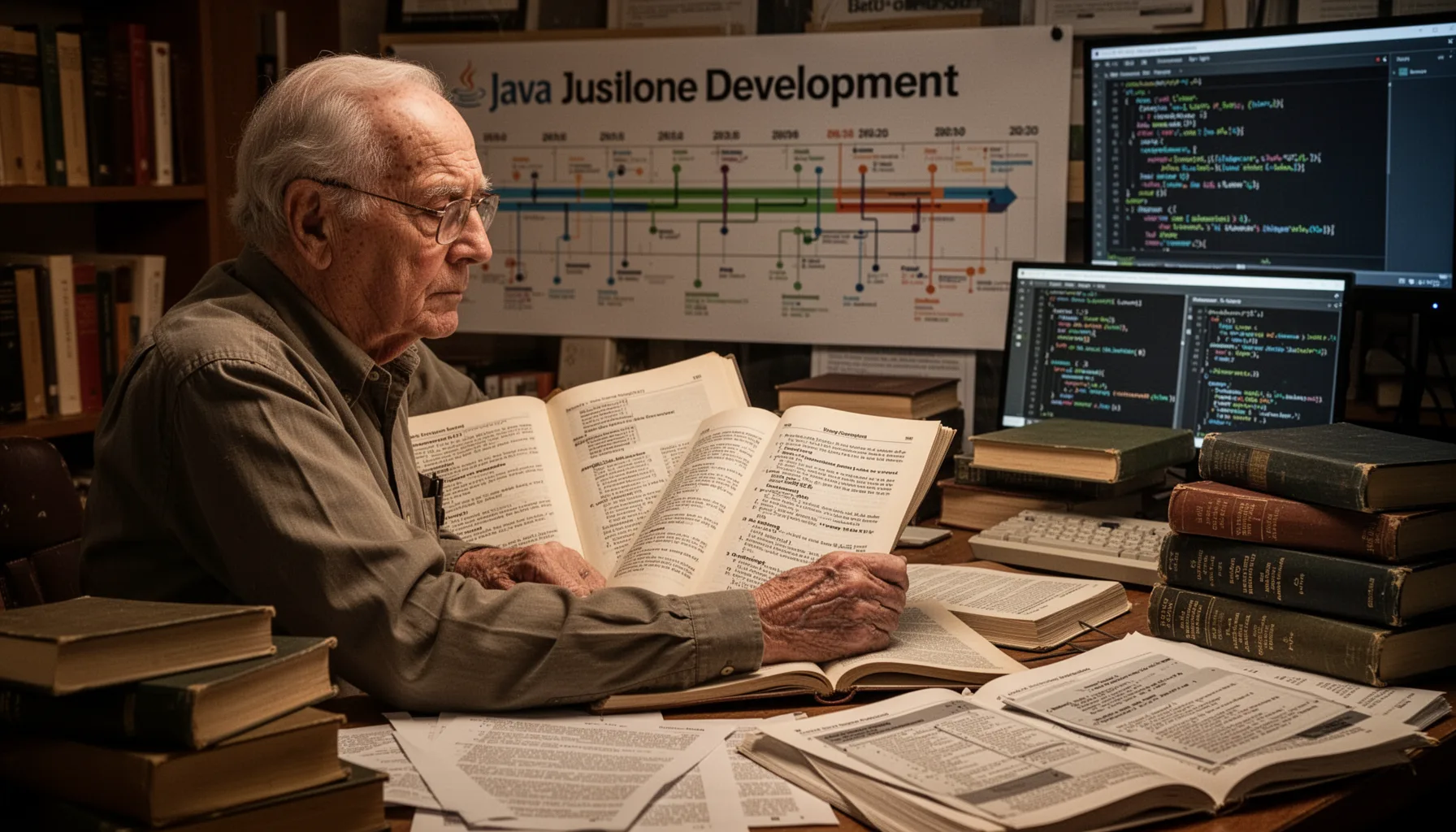
Java concurrency patterns for AI systems deserve some historical humility, because every major JVM shift solved one kind of pain and exposed another. We've seen that cycle. G1GC improved pause behavior, then teams learned heap-tuning discipline still mattered. Lambdas cleaned up code, but they also invited accidental allocation and murky stack traces in hot paths. Reactive streams gave us better flow control. And some brutally unreadable call graphs. The same rhythm shows up with virtual threads. Oracle's own guidance says virtual threads are plentiful, not infinite, and pinned threads, synchronized blocks, or native calls can still damage scalability if developers assume the scheduler can bend physics. We've seen this movie before. My read is simple: Java 21 is a strong release for AI services, especially where enterprises want maintainable request-oriented code, yet the smartest teams will pair it with ruthless profiling through JFR, async-profiler, and load tests that model token streaming instead of pretending every request looks the same. That's worth watching. A single synchronized block near a JNI-heavy model adapter can erase the pretty theory fast.
Key Statistics
Frequently Asked Questions
Key Takeaways
- ✓Java 21 virtual threads for AI workloads shine most on blocking I/O, not pure compute
- ✓Reactive stacks still win in some high-fanout, backpressure-heavy AI application designs
- ✓Most Java 21 AI inference performance claims skip tail latency and memory behavior
- ✓The best Java architecture for LLM workloads depends on where contention actually sits
- ✓Sixteen years of JVM shifts suggest every concurrency upgrade comes with tradeoffs