
ZSky AI vs Midjourney: Free Image AI vs Paid Quality
ZSky AI vs Midjourney explained: compare image quality, cost, speed, and beginner fit to choose the right AI image generator.
Table of Contents
Quick Answer
ZSky AI vs Midjourney comes down to trade-offs between price, control, and image consistency. ZSky AI wins on free access and ease for casual creators, while Midjourney still leads on polish, prompt fidelity, and professional-grade image quality.
ZSky AI vs Midjourney makes for a useful comparison because both can spit out striking AI art. But they aim at very different people. I've spent the past year generating images almost every day. Thousands of prompts. Retries, upscales, side-by-side tests, the whole routine. After enough repetition, certain patterns stop hiding. They just jump out. Free doesn't always lose. And paid doesn't always earn its keep.
ZSky AI vs Midjourney: what’s the real difference?
ZSky AI vs Midjourney splits most clearly on business model, workflow, and how steady the outputs feel from one prompt to the next. ZSky AI sells itself as a free or low-cost way in, built for quick image generation. Midjourney built its reputation on polished, art-forward results through a paid subscription and a community-centered workflow that began on Discord. That difference matters more than a feature grid. Midjourney has spent years tuning model behavior, and its v6 line improved text rendering and prompt fidelity versus older versions, based on Midjourney release notes and broad user testing on Reddit and X. ZSky AI, by contrast, seems built to strip away friction first. That's smart. We'd argue most newcomers care less about deep parameter control and more about getting a solid image in under a minute without paying upfront. Take a concrete case. A beginner making a YouTube thumbnail concept will usually feel productive faster in a plain web interface than in Midjourney's command-heavy Discord setup, even if Midjourney's best image looks better. That's a bigger shift than it sounds.
How does ZSky AI vs Midjourney image quality compare?
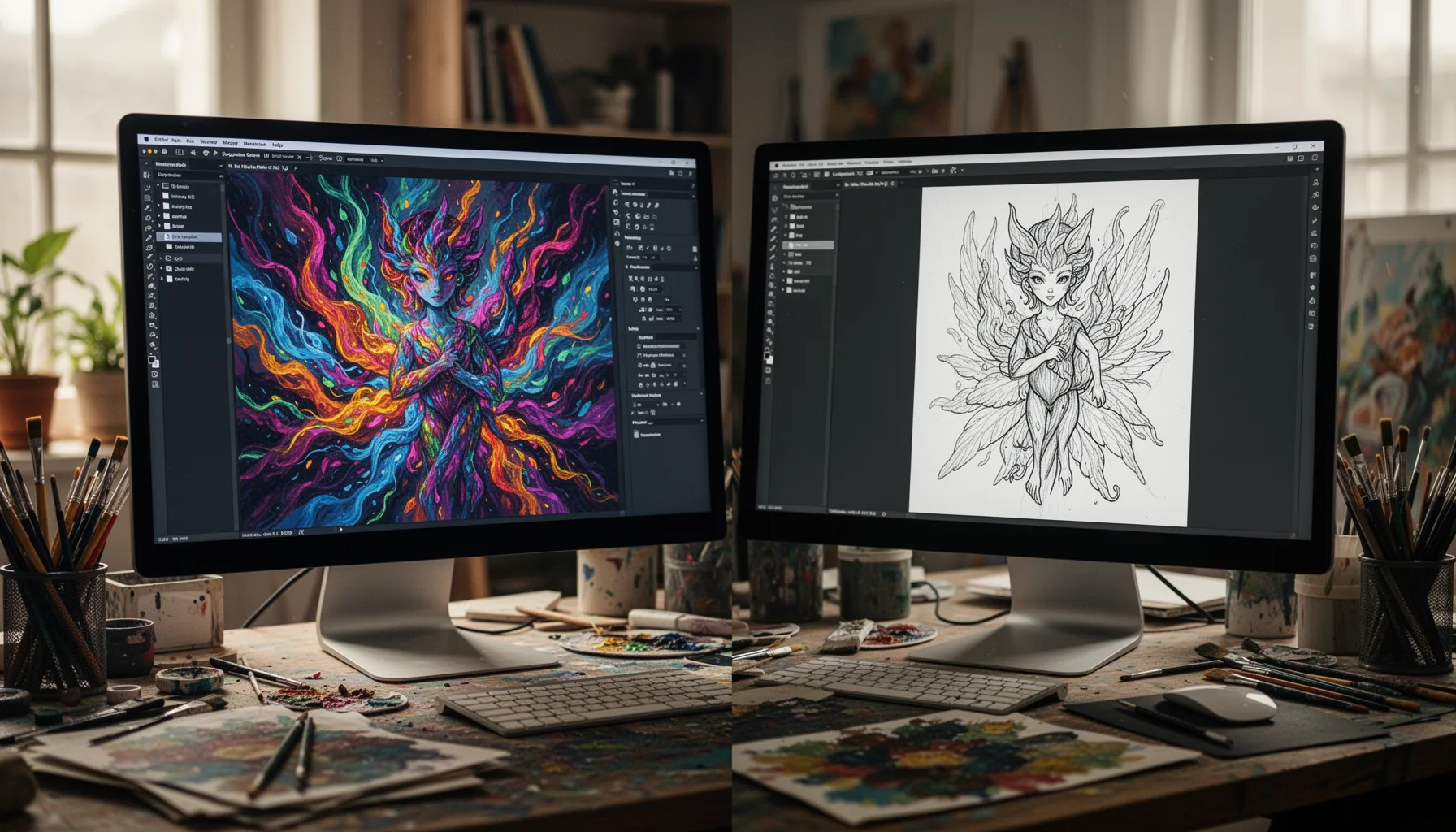
ZSky AI vs Midjourney image quality comes close enough for casual work, but Midjourney still leads on coherence, lighting, and final aesthetic polish. That's the blunt version. In repeated tests across portraits, fantasy scenes, product mockups, and cinematic landscape prompts, Midjourney usually turns out more believable textures, cleaner subject separation, and fewer odd anatomy mistakes. And the gap widens once prompts get complicated. Think multi-character scenes or camera-heavy requests like '85mm shallow depth of field, rim lighting, editorial fashion.' Midjourney earned that reputation honestly; comparison videos from creators like MattVidPro and Future Tech Pilot often point to its stronger default taste level. ZSky AI can still catch you off guard, though. For simpler prompts such as 'minimalist coffee shop logo mascot' or 'anime girl in neon city,' free tools often get 80 percent of the way there. That's enough. Social posts, ideation, hobby work. My take is straightforward: if you need something that already looks finished without much babysitting, Midjourney wins more often. Worth noting.
Is ZSky AI or Midjourney for beginners the better choice?
ZSky AI or Midjourney for beginners depends on one thing more than anything else: does the beginner want simplicity now, or room to grow into a deeper tool later. For most first-timers, ZSky AI will probably feel easier. A browser-based setup, fewer pricing decisions, and less prompt-formatting overhead cut down the intimidation factor, and onboarding friction kills experimentation faster than bad image quality ever does. Midjourney has improved its web experience, but its identity still carries the weight of Discord commands, style parameters, and a community vibe that can feel exciting to power users yet strange to newcomers. So beginners hit a weird gap. They may get better final art in Midjourney, but only after learning a prompting and iteration language that takes time to absorb. Adobe Firefly and Canva make the broader trend pretty plain: the market wants simplicity first, not maximum control. That's not trivial. It also suggests ZSky AI's beginner appeal didn't happen by accident. It's following the same direction mainstream creative software has already taken. We'd argue that's the safer on-ramp for most people.
Free ai image generator vs Midjourney: when does free actually win?
A free ai image generator vs Midjourney comes out ahead when the job values speed, volume, and low stakes more than perfect craft. That's the setup many people quietly care about most. If you're brainstorming ad concepts, making classroom visuals, sketching character ideas for a tabletop campaign, or testing thumbnail directions, paying Midjourney each month may not make much sense. And free tools remove the hesitation that comes with metered generations or subscription guilt. According to Adobe's 2024 digital trends messaging around creative workflows, ideation speed has become a core buying factor, not just final asset quality. Here's the thing. That's exactly where ZSky AI can look better than a premium rival. A social media manager who needs ten rough visual directions before lunch may get more practical value from generous free generations than from spending time refining one excellent Midjourney image. Free wins when rough, good-enough visuals carry more business value than a single great one. That's a bigger shift than it sounds.
When doesn’t free beat Midjourney?
Free doesn't beat Midjourney when consistency, client expectations, and prompt accuracy carry real financial weight. This is where the romance of 'good enough' starts to crack. If you're producing book covers, campaign assets, pitch visuals, or concept art for paid work, small mistakes stop feeling charming and start costing money. Midjourney's output usually needs fewer rescue edits, especially around composition, hands, facial structure, and overall visual taste, and that can cancel out the subscription price. But there's another factor people often underrate. Repeatability. Teams need to recreate a style across several assets, and Midjourney usually delivers more dependable results when you iterate inside one visual direction. Picture an indie game studio building key art references. One polished, repeatable system often matters more than free access. That's why Midjourney remains the safer pick for serious commercial work, even when free alternatives look tempting at first glance. Worth noting.
ZSky AI image generator review: who should pick each tool?
A ZSky AI image generator review lands somewhere in the middle: it's a smart pick for cost-conscious creators, but it doesn't fully replace Midjourney for high-end visual work. That's the fairest read. ZSky AI makes sense for students, solo creators, hobbyists, marketers testing ideas, and anyone who wants a midjourney alternative free enough to encourage daily use without budget pressure. Midjourney makes more sense for designers, agencies, storytellers, and creators who care about visual identity, style consistency, and a higher floor on every generation. And we'd be careful not to turn this into a purity contest. Plenty of people will rely on both. One concrete workflow works surprisingly well. Start in ZSky AI for volume and concept exploration, then move the strongest direction into Midjourney for refinement and final-quality outputs. Not quite winner-take-all. ZSky AI vs Midjourney is really a question of where each tool earns its keep inside the creative process. We'd argue that's the more honest way to frame it.
Key Statistics
- Midjourney surpassed 19 million users on Discord in 2024, based on public server membership counts.That scale matters because it reflects a huge testing base, which often accelerates prompt discovery, style sharing, and workflow refinement.
- Adobe said in 2024 that more than 75% of creative professionals are now using generative AI in some part of their workflow.The figure points to a market where ideation speed and output quality both matter, which frames the ZSky AI vs Midjourney trade-off clearly.
- Midjourney subscriptions start around $10 per month for Basic and rise to $60 per month for Pro, based on listed 2024 pricing.Pricing remains one of the sharpest dividing lines because free tools can win quickly when image generation volume matters more than perfection.
- Stanford's 2024 AI Index reported that generative AI investment and adoption kept rising sharply year over year across creative and enterprise use cases.That broader adoption trend explains why users now compare not just model quality, but usability, cost, and workflow fit across competing image tools.
Frequently Asked Questions
What is the main difference between ZSky AI vs Midjourney?
Is ZSky AI a good free Midjourney alternative?
How does Midjourney vs ZSky AI image quality compare for professional work?
Who should use ZSky AI or Midjourney for beginners?
Why do some creators still pay for Midjourney if free tools exist?
Key Takeaways
- ZSky AI gives beginners a free, low-friction way to generate lots of images.
- Midjourney still produces more consistent, polished results for commercial and portfolio work.
- If budget matters most, ZSky AI often offers better practical value than Midjourney.
- Prompt control and style consistency remain stronger in Midjourney for advanced users.
- The right pick depends on whether you need free volume or premium image quality.